


While obscure to some and alluring to many others, American prog rock outfit Pavlov’s Dog, featuring the incredibly unique vocals of singer songwriter David Surkamp, were a mythological phenomenon back in the early seventies with hit songs such “Julia,” “Late November”, “Of Once & Future Kings”, “She Came Smiling” and “Standing Here With You”. Music fans knew the amazing voice but nobody seems to know what they looked like or where they were from. For instance, I was always under the impression from the sound of the band that they were British, when in fact they came out of Missouri. Despite achieving platinum record sales in Australia, the band had never toured here in their five decade career … until now. For the first time ever, with a career spanning half a century, Pavlov’s Dog are finally touring Australia!
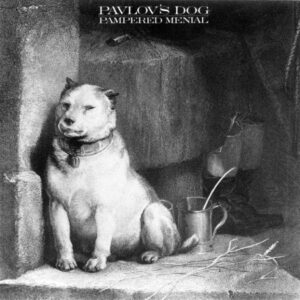
Founded in 1973 with David Surkamp up front as its inimitable leader, the band signed to ABC Records for a then unheard of sum of USD$500,000. With industry expectations through the roof, Pavlov’s Dog delivered one of the most brilliantly confounding debuts of all time in “Pampered Menial.” To say the album left journalists and radio programmers speechless would be a gross understatement. To put it simply, no one had ever heard anything like the incredible songs and vocal performances of this singular effort. Songs including “Julia,” “Late November” & “Of Once & Future Kings” remain concert highlights decades after their release. A 2nd album “At The Sound of the Bell” followed soon after, with its memorable cover design of a swinging Quasimodo and the inclusion of such fan favourites as “She Came Smiling” and “Standing Here With You”
The foundations of mystery developed throughout the following few years. Concert performances with acts including ELO, Arrowsmith, Kraftwerk, Nektar and Blue Oyster Cult met rave reviews. Soon, upcoming giants, including Heart, Thin Lizzy, Bob Seger and Journey, found themselves opening shows for Pavlov’s Dog. Still, radio found the band’s one-of-a-kind brilliance an uncomfortable fit when measured against CHR and corporate rock formulas. The band fell apart during the recording of their third album Has Anyone Here Seen Siegfried?, reformed briefly for 1990’s Lost In America and then folded again.
Upon the 30th anniversary of Pavlov’s Dog’s creation, David Surkamp assembled a new line-up of the band, and the ensemble returned to the concert stage, with Pavlov’s Dog turning out electrifying sets in its own grand tradition throughout Europe, including a breathtaking performance in front of 54,000 fans at the Arrowrock Festival in Holland.
Pavlov’s Dog has since continued to perform to ecstatic audience, and has expanded its vision with both new studio and live albums, as well as overseeing reissues of the original 70’s catalogue. Staying true to their audience, the Pavlov’s Dog live experience, is one of all the familiar classics from those original albums… As well as the career defining “Julia”, “Fast Gun”, “Trafalgar”, “Natchez Trace”, “Valkerie”, “Theme From Subway Sue”, and “Song Dance” are all present in the setlist. This is sure to be a show to thrill everyone who ever held a precious copy of those glorious vinyl albums in their hands.
Ahead of Pavlov’s Dog first ever tour of Australia, Australian Musician editor Greg Phillips caught up main man David Surkamp to chat about the band’s career and the upcoming tour. We offer you an audio recording of the interview and a written transcription.
AM: David, you’re coming to Australia for the very first time, celebrating 50 years since the release of the album Pampered Menial. The obvious question is why have you never been to Australia with the band?
DS: Well, I have been there but not with the band. About 40 years ago, I was down there and CBS gave me a platinum record, which is on my wall behind me, which I would show you if my phone was working properly. But I was there for about a week and I just had… it was fabulous, but I actually almost came and it was either ’76 or ’77 after the recording of The Sound Of The Bell, and before I left the band the first time. The promoter had to choose finally whether to bring Pavlov’s Dog over or Gloria Gaynor and he went with Gloria Gaynor. So it’s not like I didn’t try.
Going way back, who did you grow up listening to? Who would you say have been the biggest influences on your music originally?
Well, I came out of folk music when I was a little kid. My dad liked jazz. My mom listened to real country n’ western, like George Jones and Faron Young, the old stuff, the classic stuff. But what really kicked me into gear as a songwriter was Fairport Convention and the first couple of King Crimson records. And I’m kind of an amalgam of that, I guess in some ways. I mean, that first King Crimson record has a lot of acoustic guitar and folk influenced songs. I Talked to the Wind, stuff like that. So yeah, those two were really instrumental. And of course, I loved the heaviness of King Crimson with the light material, Epitaph, stuff like that. Yeah.
Back in the day, for some reason, I always thought that Pavlov’s Dog was a UK band because … I don’t know, it just sounded that way. The picture of the band wasn’t on the front cover, so I thought they must be from the UK …
Yeah, we hear that a lot. And we’ve heard that we’re from Germany a lot. Some of that might stem from the fact that we did a lot of concerts with Anglo German band called Nektar, and they were British expats who lived in Germany. So I think it just, the whole thing got goofed up somewhere in the press somewhere. But yeah, we’ve been accused of being from the UK, Germany. I don’t think anybody knows we’re from Missouri. Really.
Were there many other bands coming out of Missouri at the time?
Well, there was a scene here. It was kind of like a college circuit scene kind of. And I mean, there was REO Speedwagon and Dan Fogelberg, and I think they lived in the same house in Champaign, Illinois, which was just a couple hours from here. But I mean, we played Champaign, we played Chicago, we played Springfield. You played St. Louis, you played the Springfield in Missouri, you played Kansas City. Kansas was around then. There was a handful of us that were doing concerts. We were certainly the only progressive band of the lot. I mean, we were insane. We carried around two Mellotrons. I don’t know what was the matter with us!
Is that in case one went down or you actually used both of them?
No, we actually used them. Yeah. David Hamilton played organ and piano and had this Italian string ensemble thing, Art String Ensemble, I think it was called. And then Douglas Rayburn had the two Mellotrons and they had Mini Moogs. We had probably the only Mellotron in the country. We probably had the earliest mini moogs in the country. But yeah, there weren’t many of us, let’s put it that way. And nobody knew what to make of us. I mean, you couldn’t dance to us.
So was that gear problematic on stage at times?
Oh, I wanted to take a blow torch to the Mellotrons. I mean, set ’em on fire or something. I don’t know. Douglas was very good at keeping them operating. Douglas Rayburn. In fact, Mellotron would contact Douglas and ask him, what can we do to improve this? So yeah, it was problematic. Definitely.
It was reported that you were given over half a million dollars by CBS records to record Pampered Menial. How did such a lucrative deal come about in those days?
I guess nobody’s seen anything like us. We got a reputation for being really good live band. And I mean, there were bands that wouldn’t even … like Kiss wouldn’t open for us. Aerosmith threw us off a tour after one or two dates because in case they had a bad night or something, I guess. I don’t really know, but I know we only made a couple shows and it was supposed to be half a dozen or a dozen or something. But yeah, we were pretty good live.
You had bands like Heart, Journey and Bob Seger supporting you at certain points …
Yeah. You name it.
Was there support band that you had a particular bond with?
No, not really. I mean, I had the honour of opening for Fairport Convention when they played St. Louis. I knew the promoter and he called me up and he said, would you like a couple tickets to the show? I know that you’re in love with Sandy Denny’s voice. And I said, well, no, but how about if I just open the show for free? Just make sure there’s a piano and a microphone for me and I’ll open the show. And he said, well, of course I’ll do that. So yeah, I got to meet Sandy. That was kind of a thrill, but support band … I guess the only one I really connected with was Nektar and Roy Albrighton, their lead singer, songwriter guitar player. We were friends till the day he died. In fact, I talked to him a month or so before he passed,
What are your memories of the recording sessions for Pampered Menial? Where did you record? How long did it take?
We were pretty fast. It was in New York, in the big studio at Columbia Records where you see Dylan cutting Highway 61 and Laura Nyro and Miles Davis, and you name it, they all recorded in that room. Bitches Brew was cut in that room. It was huge enough for an orchestra. We didn’t really know … at least I didn’t know what I was doing. Rick Stockton and I were the two youngest, and the other guys were only three or four years older. But when you’re 21 or 22, that’s a lot.
At the band’s peak, I believe you weren’t very happy with some band members, with the record company. If you had your time again, would you have done anything differently?
No. After the second record came out, a number of the band members decided that they were songwriters and they actually had no ability to write songs. So I said, you guys do whatever you want. I don’t care. And they went ahead and recorded some demos, sent it to Columbia Records, and Columbia Records said, what is this crap you sent us? This is not what we bought. So to our manager I said, listen, I’m getting out of here. He goes, not until you deliver a third album. So he stuck me in a hotel room with a mellotron and a piano, and I think it was my Wurlitzer for piano, a couple guitars, mandolin and stuff. And I wrote that whole third record in two weeks just to get out of it. And then I left. I left and moved to Seattle. And yeah, I wouldn’t change anything I did.
You wrote a lot of songs in the early days that you kept for yourself or shelved. Are there still seventies era songs waiting to be recorded?
I write all the time. Yeah. I can’t really help it. No, not really. No. No. I mean, I’m always writing. I mean, I’m kind of a solitary person. I’ve been married 35 years to my wife. My kids are grown. My piano’s 10 feet from me, and I have a Telecaster sitting behind me and a guild acoustic sitting on across the room. So I’m pretty content right here.
Speaking of guitars, what is your main guitar now and what was it back in the day?
I’ve always played the same two things. Telecasters. I still have my very first Telecaster I got in high school. And Les Pauls … I got the one pickup kind of Les Paul, the Junior, which I really love. And then I got a two pickup kind of one, like the Burst that everybody wants. And when I’m touring, my local road manager and good friend Jeff Bailey has built me a bunch of Telecasters that he built from scratch, and I mostly use those. They’re a lot more reliable than the Fenders, especially my old yellow one, which is, I don’t know, closer to 60 years old than it is 50.
What about amplification? Are you into the warmer, older amps?
Yeah. I don’t like new ones. I record with a 1958 Gibson GA20. It’s about, I don’t know, it’s somewhere between a Princeton and a Deluxe volume-wise, and it’s got a 12, and that’s what I use for recording. And then I got two mid sixties Deluxe reverbs. I think they’re both 65’s. And then I have two Princetons that I took the speakers out of and put 12 inch Celestions in. And they’re from, I think, 1968, 1969. So yeah, I don’t have anything like a new amplifier that I use on the road. You familiar with Magnatone amplifiers?
Oh, yeah, yeah, yeah.
Okay. The guy who designed all the Ampegs and all the Magnatones and a bunch of the Krates is a kid named Obeid Kahn. And I’ve known him since he was 16 or 17. And he’s designed all the amps that Billy Gibbons uses with ZZ Top, all those stacks of Magnatones. So I asked him to build me a small head that would be as loud as a Deluxe verb that I can carry around the world, so I can do it one 10 or two 20, and I can drive an eight ohm cabinet or a six 16 ohm cabinet. And that’s what I tour with. It’s kind of like a 20 Watt Marshall kind of
Your voice … Speaking of instruments, your voice is one of the most unique in modern music. The first time I heard song dance from Pampered Menial, I was just blown away. Did you ever have formal singing lessons?
Oh, no. What happened was, well, first of all, I was the only one that wrote songs most of the time, so I kind of had to sing ’em if I was going to hear ’em. But no, it was a case of there was like seven guys in the band and nobody could sing. So I just was a singer by default, basically.
You also worked as a music journalist on the other side of the fence for a little while. Did you enjoy that time?
I loved it. Yeah. It was when my wife and I had our daughter, and I’d been on the road since I was 18, and I just wanted to see Sailor grow up. So I went to the Pulitzer Publishing Company who has the big newspaper in St. Louis. And I knew the editor and he always admired my work. And I said, I think I could probably do what you do instinctively a writer. So yeah, I did thousands and thousands of articles and interviews and stuff. Some were really strange. I interviewed Michael Hutchence (INXS), and he asked me, are you that David Surkamp? And I said, yeah, I think I’m the only one. And so he got asking me Pavlov’s Dog questions. It was weird. Nice guy.
Yeah. Yeah. They’re all great guys in that band.
Yeah, he was very kind.
Have you had many artists surprise you over the years by telling you that they’ve been fans of the band?
Yeah. Yeah. Yeah. Occasionally. Yeah. I mean, Iain Matthews (Fairport Convention), and I’ve been friends for… shoot, 40 years maybe. In fact, I’m going to see Iain next week in Europe. We are going to play some shows over there next week. And I was surprised that he liked my singing, he’s a way better singer than I am, obviously. I mean, he and Sandy (Denny) together. Oh my God. But I try, I mean, we put a band together called Hi-Fi, just basically because we’re friends and nobody on the planet would think that the two of us would sing together. So that was fun.
So you’re coming to Australia in October playing Pampered Menial in Full. Have you stayed loyal to the original versions of the songs?
Yeah, I mean, we tend to stretch out some more, like when we’re on stage, just as that’s what happens. But yeah, I mean, I sing everything in the original key. I wrote it for me to sing, obviously. Yeah, like Subway Sue … we had our last rehearsal yesterday before we leave. I think in the middle, there’s only one solo on the original recording. But yesterday we were rehearsing, and I think I did the first solo and Abbie Steiling, our violinist did the second solo. And then Phil Ring, the other guitar player did a solo. So they naturally stretch out because that’s what happens on stage. But that would be a perfect example. Did we change the arrangements of the song? No.
Are you playing it in track order?
No, no, no. We take stuff out of every record. I mean, our new record Wanderlust will be coming out in September, I believe. So we’re doing a song from that that nobody’s heard. And we’ll do a song from the Siegfried album, a song from Prodigal Dreamer, or a song from Lost in America. Yeah. I mean, there’s a wide variety. I’ve written a tonne of songs, so they go in circles. But there’s some things that I just have to sing because people expect it. I don’t want to get lynched or not doing Julia or something.
So when you think back on your career, what are the real highlights that come to mind?
Well, I guess I never thought of it as a career. I’ve always just kind of been a songwriter type. But I mean, I love playing in front of people, that’s never been an issue. I mean, we played Arrow Rock Festival, and it was, what, 50 or 60,000 people? It was too many people for me, I’ll tell you that. I couldn’t see the end of the audience. And we’ve done lots of festivals over the years and stuff, but Saratoga, stuff like that. But I kind of like smaller venues. Between a thousand and two thousand is perfect, actually. I seem to be able to connect … where I’m happy, connecting maybe with something where I can sort of handle the room.
Will you be meeting fans after concerts?
Always. I’ve always done it. I’ll tell you why. Before Pavlov’s Dog got a record deal, I went out to see Dolly Parton play at this theme park outside of St. Louis. It was July and it was 105 hundred and 110 degrees. And she came out with the wigs and the makeup and the dress, I mean, and she sang. It was right when Jolene came out, and I Shall Always Love You, what are we talking? ’74 Maybe? Something like that. And then she got off that stage and she stood in the heat for at least a half hour, probably closer to 45 minutes, kissed every baby, signed every autograph. And I was like, if that little lady can do that, if I ever get a shot at doing concerts, I want to be like her, and I want to meet everybody. I want to shake everybody’s hand. So yeah, we make a practice for doing that every show.
Yeah. I saw Hank B Marvin from The Shadows on the weekend playing a gypsy jazz thing and he spent at least 90 minutes signing autographs and having photos taken after the gig.
Wow. He’s got to be getting up there.
83!
Wow. Last tour, we threw The Savage, one of their songs, The Savage into our set, just because when I was a kid, I learned how to play the Shadows songs. And yeah, they went down a storm. It’s the only thing we did that I didn’t write, but I’m a guitar player too, so Yeah. I did my hat tip to Hank for sure.
So what are you looking forward to most about the Australian tour?
Well, just to play there properly because when I went down there to get said platinum record, I didn’t play music. The highlight of my trip really was I was in a radio interview and we got a call from George Vanda and Harry Young, oh no it’s Harry Vander George Young. I’m sorry, Vanda and Young. I have that backwards. I’m sorry. And they called the radio station and invited me over to Albert Studios, and I spent the afternoon with them. And it was the greatest honour of my life because one of the very first songs I ever had on a 45 single was Friday on My Mind. So I was sitting there, just my mind was blown. That’s all I can say.
Yeah. Quite a legacy that come from those two guys.
Wow. No kidding. What great songwriters.
Yeah. There’d be no AC/DC without them either.
No, there sure wouldn’t would there. And they gave me a CD Flash in the Pan that they had just put out. It was wonderful.
Alright David, well, it’s been a pleasure to talk to you and we look forward to seeing the band down here, and I look forward to seeing your face in Australia.
Well, please, can you introduce yourself when I’m there?
I will.
And we’ll share a beer. I mean, we’re from the beer capital of America right here, St. Louis.
Okay. I think you can find a beer here too.
I’ll bet I can. Well, thank you so much for your time. I appreciate it so much.
Thanks, David. All the best
And we’ll see you in a couple months.
AUSTRALIAN TOUR DATES
SYDNEY – THE FACTORY – FRIDAY OCTOBER 17
PERTH – ROSEMOUNT HOTEL – SUNDAY OCTOBER 19
MELBOURNE – CORNER HOTEL – FRIDAY OCTOBER 24
BRISBANE – TRIFFID – SUNDAY OCTOBER 26
On Sale now www.davidroywilliams.com