

Review by Greg Phillips
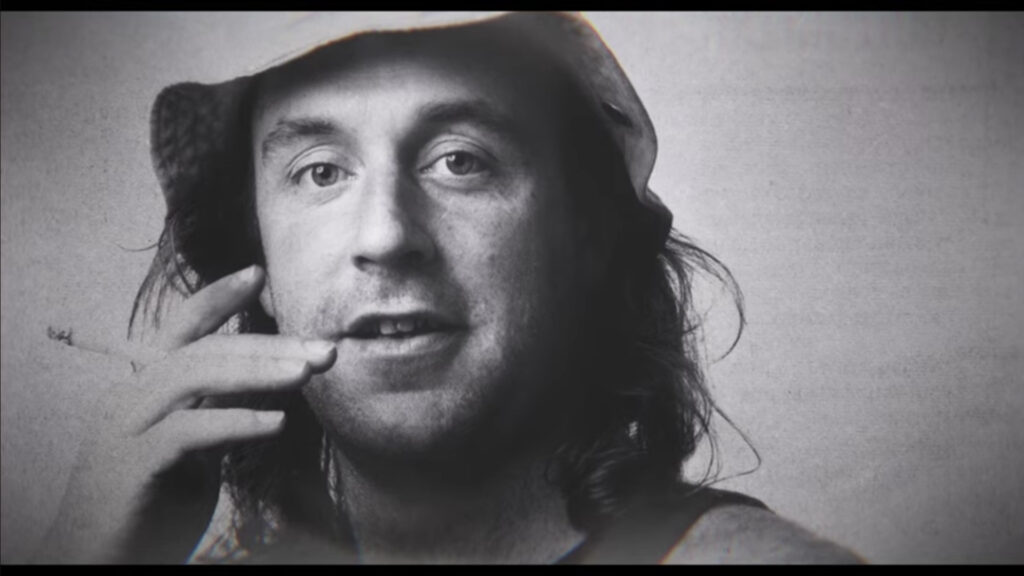
Currently screening at MIFF 2025, the documentary But Also John Clarke is not only a thoroughly enjoyable 103 minutes of laughs and a fascinating peek into the personal life of one of Australasia’s greatest satirists, it’s also an important document of John Clarke’s life. While Clarke never really wanted to write an auto biography, he did film many candid moment of his life and his daughter Lorin Clarke was savvy enough to sit her dad down on many occasions for a series of intimate interviews about his life. Add to this the extensive television and film footage that is available and Lorin was able to piece together this fabulously informative, touching and funny movie. When Clarke died in 2017 due to a heart attack while hiking in Victoria’s Grampian Mountains, the world mourned the loss of a comic hero, the anti-establishment everyman.

Through the use of photographs and interviews with childhood mates, But Also John Clarke takes us back to Clarke’s school days and shows us the genesis of his famous cheekiness and anti-authority attitude. We also get a glimpse into his parents’ story and the characteristics that rubbed off on him.
Narrated cheerfully by John’s daughter, writer/director Lorin Clarke, the film’s delightful pace and supportive editing choices (courtesy of editor Aleck Morton and editing assistant James Phillips) always piques your interest. Often a documentary that follows a strict chronological order can sink into tedious territory quickly if the focus is on superfluous details. However, But Also John Clarke doesn’t subscribe to this formula, hopping from era to era and returning to childhood years when context requires.
There’s no shortage of local and international friends and work colleagues willing to contribute to the project such as David Wenham, Sam Neill, Ben Elton, Rhys Darby, Stephen Fry, Andrew Denton, Wendy Harmer, Anne Edmonds, and more who offer their professional and personal experiences with Clarke.
At the heart of the film is the popularity of Clarke’s fictional character, the sheep-shearing, gum boot-wearing Fred Dagg (who had seven sons all named Trev!) and the impact Dagg had on New Zealand’s culture. Dagg was to New Zealand what Paul Hogan was to Australia. The film documents the rise of Dagg and outlines the political comment behind much of his humour. Clarke recorded a series of records and published several books as the Dagg character. Four decades after its release, the first Fred Dagg album, Fred Dagg’s Greatest Hits (1976), remains one of New Zealand’s biggest selling records. So big did the Dagg character become, that the deep-seated New Zealand tall poppy syndrome kicked in and the pushback led to Clarke relocating to Australia in 1977 to revitalise his career.
The film then follows Clarke’s career from his appearances on The Gillies Report and his legendary news broadcasts about the mythical sport ‘Farnarkeling’ to the satirical TV series The Games, depicting the lead up to the 2000 Olympic Games. Arguably Clarke’s most popular television appearances were courtesy of his short interviews with friend and collaborator Bryan Dawe on Channel Nine’s A Current Affair. During these interviews Clarke would pretend to be all manner of politicians and prominent public figures, including Julia Gillard, Jeff Kennett, Tony Abbot or Paul Keating, all delivered in the same deadpan manner. In this documentary, A Current Affair’s original host Jana Wendt speaks of the Clarke and Dawe segment with great fondness. The popularity of the segment led to the breakaway program Clarke and Dawe on the ABC.

Interestingly, the film reveals that Clarke had attracted a lot of writing work in Australia. The first job he acquired was as screenplay writer for a Paul Cox feature film, much to Cox’s initial chagrin. He also wrote for Graham Kennedy’s TV show and Bette Midler and Peter Allen, while those artists were touring Australia. Clarke wrote a poetry book, scribed for several newspapers and of course delivered the Fred Dagg books.
Each of the guests in this film speak so lovingly of the larrikin Clarke and none more so than his close friend Sam Neill, who says in closing, “I never knew anyone quite like John. He was utterly unique. He thought differently, he looked different. He behaved differently. He was he was immensely funny in a different way than anyone had ever seen before. He’s unforgettable. Unforgettable. On every possible level.”
The last words however, are left to his daughter Lorin, who created this heartfelt tribute to her dad and reminds us of a phrase Clarke used to say to her… “Life would be pretty boring if we didn’t make it funny.”