

JT CURTIS: A HISTORY IN JOSHUA BATTEN’S WORDS
NYC-based singer-songwriter-guitarist and YouTuber JT Curtis is a prime example of someone who lives and breathes Rock & Roll. The son of 70’s session singer Becky Curtis and writer/director/producer/Woodstock attendee Jay Curtis, JT was raised in California on a heavy diet of Classic Rock and Counterculture. From a young age, he developed a deep affinity for the likes of The Beatles, Pink Floyd, The Allman Brothers Band and more. After relocating to New York in the 2010’s, his big break came when he was selected to play the role of George Harrison in Broadway Beatles tribute show Let It Be, before going on to tour globally with the show from 2013-2015. Around this time, he began building his YouTube presence with his comedic educational series The History of Rock & Roll. Each episode focuses on one decade at a time, highlighting songs and stories of the time between scripted comedic segments.
In 2022, JT began making and releasing a new series of YouTube videos, this time focusing on Pink Floyd’s back catalogue and history. Over a two-year period, JT reviewed all of Floyd’s studio albums, live albums, and milestones, recounting the stories behind the making of each album while also offering his own passionate critiques. This series was how I discovered JT’s YouTube channel, and that led me to looking into his own original self-released music, the highlight of which was 2019’s ‘Elements’, a 22-minute Progressive Rock suite with one section for each of the four elements. The piece is also JT’s tribute to his late father Jay, as the piece incorporates samples of his poetry, written and recorded before his passing from ALS.
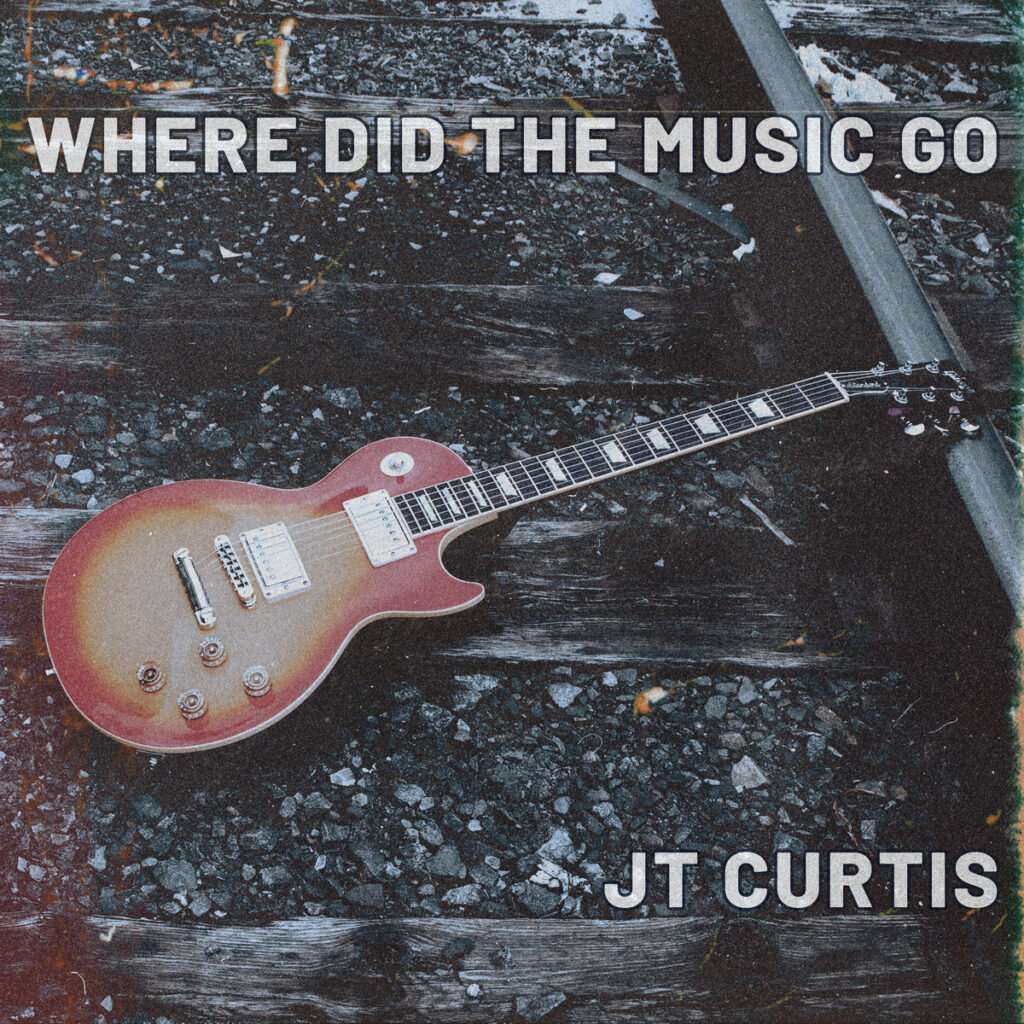
As a fellow musician and classic progressive rock fan myself, ‘Elements’ was right up my alley, and I began eagerly waiting for the right opportunity to talk to JT Curtis in such a way that would best introduce his music and content to AM readers and watchers. Fortunately, his new album ‘Where Did The Music Go’ has provided that opportunity amply, as it encapsulates all of JT’s best qualities as a musician, as well as his strong political and environmental beliefs.
‘Where Did The Music Go’ is a sci-fi concept album set in a dystopian future where all music consumed by the masses is AI-generated (“So now, basically”) and tells the story of an underground society that lives off the grid, plays live music and eventually stages an uprising against the AI. The album is a biting commentary on the current state of music and technology, while still being concise, avoiding the bloated padding common in double-album rock operas by clocking in at 44 minutes with a clear side A and B.
THE INTERVIEW:
JT CURTIS joined Australian Musician’s JOSHUA BATTEN to discuss his ambitious new album Where Did the Music Go?, a timely and provocative anti-AI concept record, while also reflecting on his wide-ranging musical journey as a performer, composer and influential YouTube music educator.
MORE ABOUT THE INTERVIEW
Curtis traces his musical roots to a deeply creative family environment. His mother sang with legendary songwriter Otis Blackwell, while his father was a major formative influence, exposing him to a vast record collection and later appearing in many of Curtis’ videos. Growing up immersed in the Beatles, blues masters such as B.B. King and Elmore James, and eventually becoming obsessed with the Allman Brothers and Pink Floyd, Curtis credits Duane Allman and David Gilmour as defining guitar influences.
After early years playing around Los Angeles with his band Seven Sun, Curtis relocated to New York, where his career expanded into theatre, including performing as lead guitarist portraying George Harrison in Let It Be on Broadway. Alongside consistently releasing original music, he later issued Elements on vinyl, a conceptual work largely dedicated to his late father, blending philosophy, poetry and music into a four-part suite.
Curtis’ online presence became a major creative outlet, beginning with the History of Rock and Roll YouTube series co-created with his father, followed by deep-dive explorations of George Harrison’s solo catalogue and an exhaustive album-by-album examination of Pink Floyd’s discography. What began as a way to stay creatively focused during the pandemic evolved into one of the platform’s most detailed and respected long-form music analysis channels.
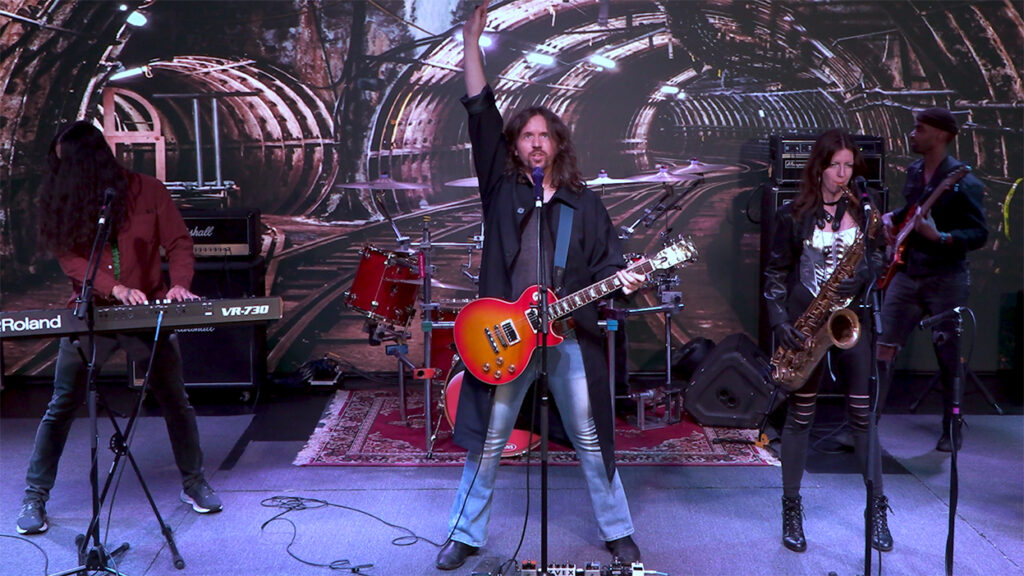
 Where Did the Music Go? represents Curtis’ most fully realised conceptual statement to date. Set in a dystopian, post-apocalyptic world dominated by AI-generated music, the album contrasts a digitised surface society with an off-grid underground of human musicians. Central to the narrative is the character of the “Princess in Chrome,” portrayed vocally on the album by Megan Rose and visually by Colleen Farqua, whose dual role as singer and saxophonist reinforces the album’s themes of interchangeability and identity in modern music culture.
Musically, the album was developed through a combination of detailed demos and live rehearsal experimentation, with extended sections, including a 22 minute jazz-inflected centerpiece, evolving organically through jam sessions and performances. Curtis emphasises the importance of setting firm deadlines despite creative compromises, citing the urgency of the album’s anti-AI message and environmental concerns as reasons not to delay its release.
Beyond cultural implications, Curtis voices deep concern about the environmental cost of AI technology, its energy consumption, and society’s growing dependence on digital systems. These anxieties underpin recurring lyrical motifs such as the phrase “everything is okay,” which Curtis likens to Orwellian reassurance masking systemic collapse.
One of the album’s most intense moments features a raw, Chris Cornell-inspired vocal scream, which Curtis describes as emotionally draining and cathartic, channeling grief, anxiety, unresolved anger, and his struggle with PTSD following his father’s death. While not the most technically difficult vocal on the album, it proved to be the most emotionally taxing.
Despite once aspiring to traditional industry milestones, Curtis now measures success more personally. He hopes listeners engage meaningfully with the album, supports his work, and allows him to continue creating, performing occasionally, and exploring future opportunities, including possible licensing placements. Alongside his original work, Curtis remains active with his Pink Floyd tribute band Pompei Floyd and is open to touring opportunities should the circumstances align.
Ultimately, Where Did the Music Go? stands as Curtis’ warning, reflection and open question, a deeply human response to an increasingly automated world, leaving listeners to decide what remains when the systems go offline.
LINKS
‘Where Did The Music Go’ Behind The Scenes
Pink Floyd Album Review Series
https://linktr.ee/jtcurtismusic
https://jtcurtis.bandcamp.com/album/where-did-the-music-go
About the interviewer Joshua Batten: https://www.joshuabatten.com.au/