


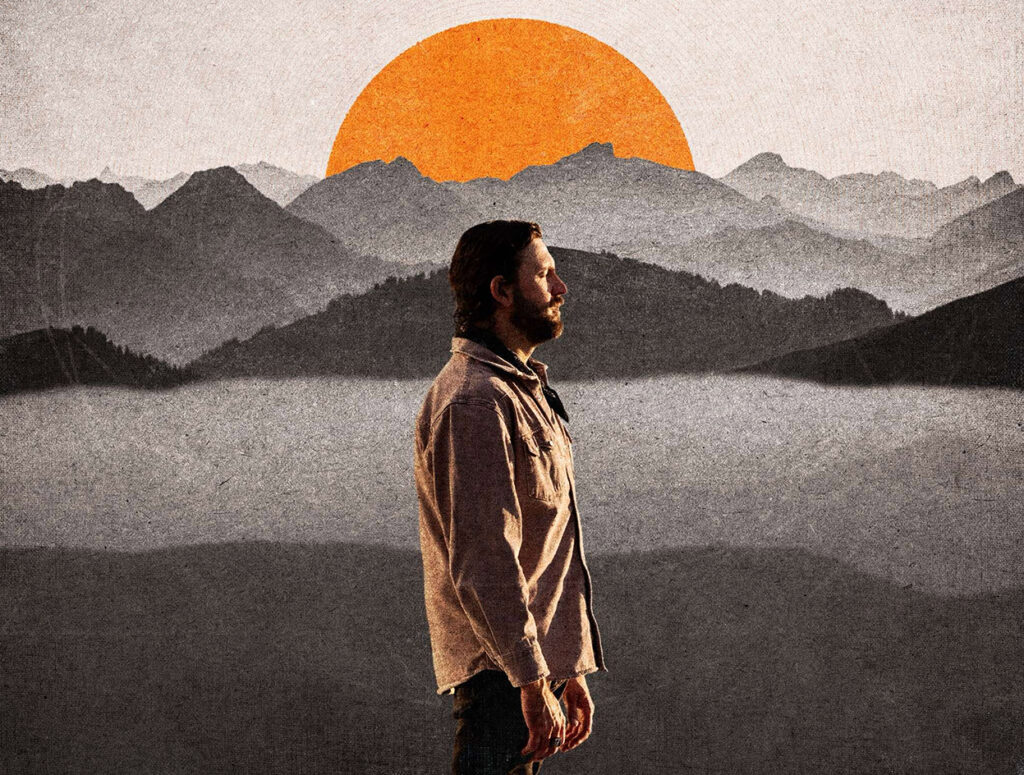
Jack Biilmann’s sixth album, Move the Mountains, grew out of roughly 18 months of songwriting and personal upheaval. Rather than being conceived as a traditional concept album, the record evolved as Biilmann paired older guitar riffs and musical ideas from his songwriting “stockpile” with songs inspired by what was happening in his life. During that period, he and his wife faced a series of major challenges, including his father’s motor neurone disease diagnosis, miscarriages, cancer in the family and the loss of friendships. Writing became a way for Biilmann to process those experiences and ultimately “move through” them. The album’s title reflects that idea of confronting enormous obstacles. It also connects to Biilmann’s lifelong relationship with the Snowy Mountains, a place he describes as a refuge where he can decompress and gather his thoughts. That landscape and family history have long influenced his songwriting.
Australian Musician editor Greg Phillips sat down over a zoom call with Jack Biilmann to discuss the making of Move The Mountains.
MORE ABOUT THE INTERVIEW
Musically, Move the Mountains represents Biilmann’s most collaborative album with his current band: drummer John O’Warren, bassist Alec Coulson and guitarist Pat Quinn Quirk. Biilmann would generally develop songs that worked acoustically or solo before bringing them to the band, where the musicians shaped and expanded them. He also road-tested several songs at festivals and shows before recording them, allowing the band to refine arrangements and discover where sections could be tightened.
Producer Matt Barnes remained an important creative partner. Having worked with Biilmann across his career, Barnes helped push the songs further while encouraging Biilmann to know when a song was finished. In the studio, the priority was to capture the energy of the band’s live sound. Guitars were carefully miked and experimented with, with multiple microphones and amplifier combinations giving Barnes options during mixing. Biilmann’s Bad Cat amps formed an important part of the album’s guitar sound, alongside a collection of vintage and modern guitars, including a 1965 Harmony Rocket, 1961 National Res-O-Glas, Stratocasters, Telecasters, a Gibson J-45 and other instruments.
A key lesson from Biilmann’s previous album, Divided Mind, was the importance of cohesion. That record deliberately juxtaposed an acoustic live performance recorded in an old stone church with a blues-rock side, but Biilmann felt the contrasting material might have worked better as separate EPs. For Move the Mountains, he wanted a record that flowed naturally from beginning to end, while still moving between blues, rock and country.
That narrative is reflected in the sequencing. The tracks largely follow the emotional chronology of the previous 18 months, taking the listener from difficult periods towards better times. “Outlaw” opens the record as something of an introduction to its sound and is unusual for Biilmann because it tells a fictional Western story rather than drawing directly from his own life. “Move the Mountains,” meanwhile, is one of the album’s most personal songs, addressing his father’s illness and promising to stand beside him through it.
The recording also allowed for some experimentation. On “Haze on the Highway,” Biilmann and Barnes created a pulsing, reverb-heavy backing vocal at the end of the track, an unexpected studio experiment influenced partly by Biilmann’s listening to Australian electronic artist Flume. Rather than removing the unusual sound, they kept it because it gave the song an atmospheric lift.
Biilmann sees Move the Mountains as the culmination of years of refining his songwriting, recording and live performance. More than simply documenting a difficult period, the album represents the process of working through it and Biilmann hopes it will become the record that takes his career to its next level.
linktr.ee/jackbiilmann
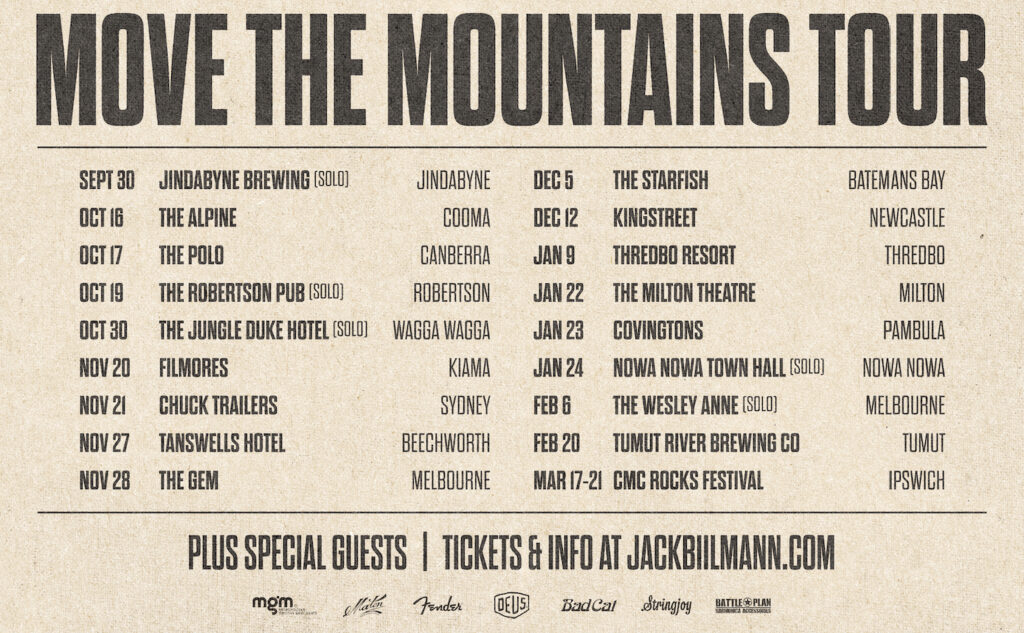
Oct 16th, The Alpine, Cooma (FREE ENTRY)
Oct 17th, The Polo, Canberra Buy Tickets Here
Oct 19th, The Robertson Pub (solo) (FREE ENTRY)
Oct 30th, The Jungle Duke Hotel, Wagga Wagga (solo) (FREE ENTRY)
Nov 20th, Filmores, Kiama Buy Tickets Here
Nov 21st, Chuck Trailers, Sydney (FREE ENTRY)
Nov 27th, Tanswells Hotel, Beechworth (FREE ENTRY)
Nov 28th, The Gem, Melbourne Buy Tickets Here
Dec 5th, The Starfish, Batemans Bay Buy Tickets Here
Dec 12th, Kingstreet, Newcastle (FREE ENTRY)
Jan 9th, Thredbo Resort, Thredbo (solo) (FREE ENTRY)
Jan 22nd, The Milton Theatre, Milton Buy Tickets Here
Jan 23rd, Covingtons, Pambula Buy Tickets Here
Jan 24th, Nowa Nowa Town Hall (solo) Buy Tickets Here
Feb 6th, The Wesley Anne, Melbourne (Solo) Tickets coming soon.
Feb 20th, Tumut River Brewing Co, Tumut Tickets coming soon.
March 17th-21st CMC Rocks