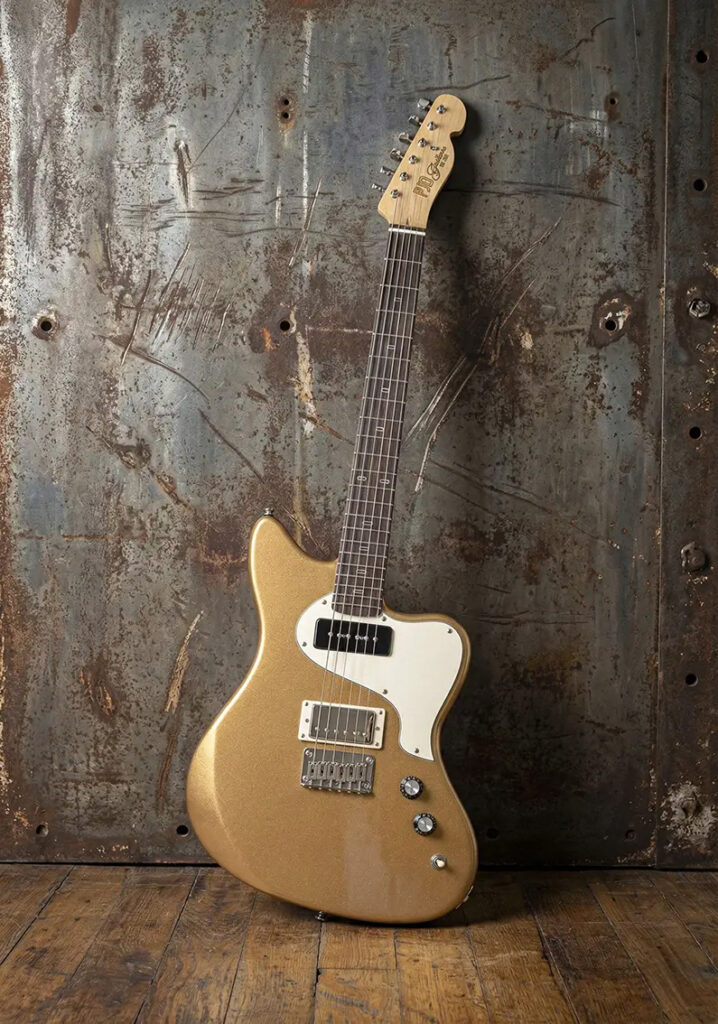


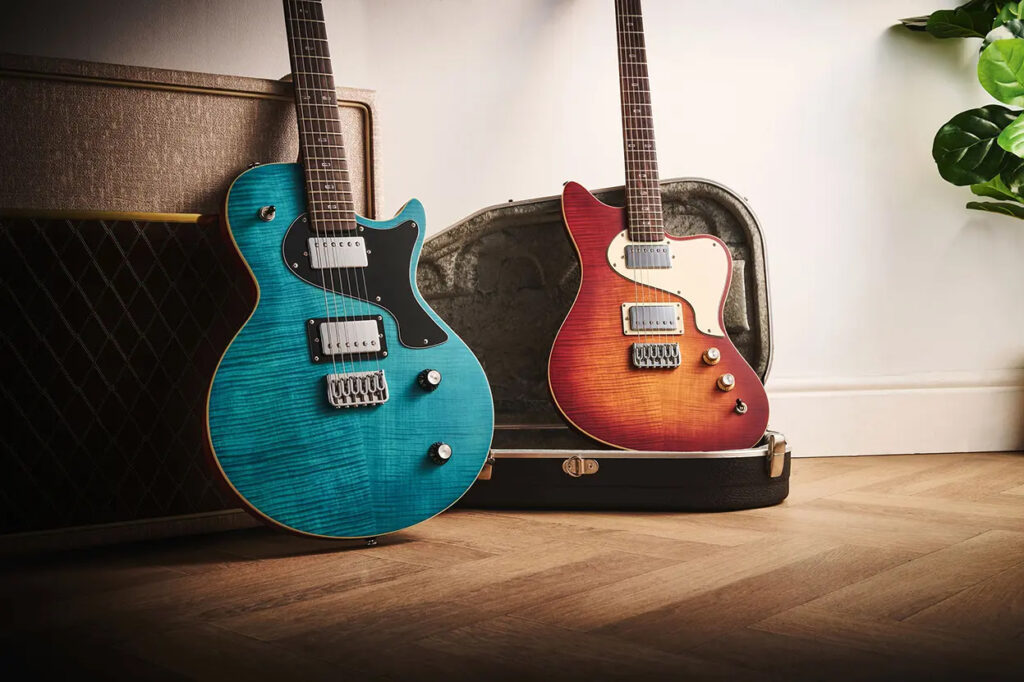
In March this year, acclaimed UK guitar brand PJD GUITARS were introduced to the Australian market at the Sydney Guitar Show and are now available in selected stores through local distributor F Payton and Son.
In our interview with Leigh Dovey, founder of PJD Guitars, he tells us that the journey into instrument building began with experimentation, plenty of mistakes and a growing realisation that he could make guitars that genuinely worked as professional musical instruments. Although Dovey had been building before 2010, that was the year he felt confident enough to put the PJD name into the world. The initials belong to his father, a carpenter and prop maker whose workshop and tools Dovey inherited. Naming the company PJD was both a practical choice and a tribute to his father, while also allowing the brand
to exist beyond Dovey himself.
MORE ABOUT THE INTERVIEW AND PJD GUITARS
Dovey’s early years as a builder were very much about learning by doing. What initially appeared to be a relatively simple process quickly developed into a rabbit hole of specialised tools, techniques and problem-solving. He remains convinced that guitar building is a discipline in which you never stop learning. One piece of advice from another builder has stayed with him: rather than necessarily becoming better at building guitars, builders become better at repairing their mistakes. For Dovey, experience has meant developing the ability to recognise problems and work with materials and situations that would have defeated him earlier in his career.
Before establishing PJD, Dovey worked as a sound and video engineer, including at London’s Royal Opera House. That experience exposed him to some of the world’s finest classical musicians and gave him a strong appreciation of the relationship between instruments, musicians and sound. He doesn’t claim that working around orchestral instruments directly taught him how to build electric guitars, he recognises the fundamental differences between acoustic and electric instruments but being immersed in the music industry undoubtedly influenced the way he approached guitar making. Dovey had also spent time playing in bands, touring and performing alongside other musicians, although he eventually discovered that he enjoyed building guitars more than playing them.
When PJD began, Dovey’s ambitions were very different from the company that exists today. Originally operating as PJD Customs, the business was intended to provide highly customised instruments, with Dovey exploring unusual ideas such as acrylic-topped guitars featuring laser-etched designs. He eventually realised that offering virtually unlimited options wasn’t necessarily an advantage. Too much choice, he found, could make the decision harder for customers. That experience helped lead PJD towards a more focused range of models with carefully selected specifications and a manageable choice of finishes and woods.
That philosophy is also evident in PJD’s approach to design. Rather than attempting to completely reinvent the electric guitar, Dovey prefers to start with familiar forms and then introduce subtle changes. The company’s designs include recognisable offset and single-cut shapes, but with details that distinguish them from established classics. The Carey, for example, deliberately combines elements Dovey likes from different guitar traditions, such as the visual appeal of a figured-top single-cut instrument with a bolt-on neck, reflecting his personal preference for bolt-on guitars.
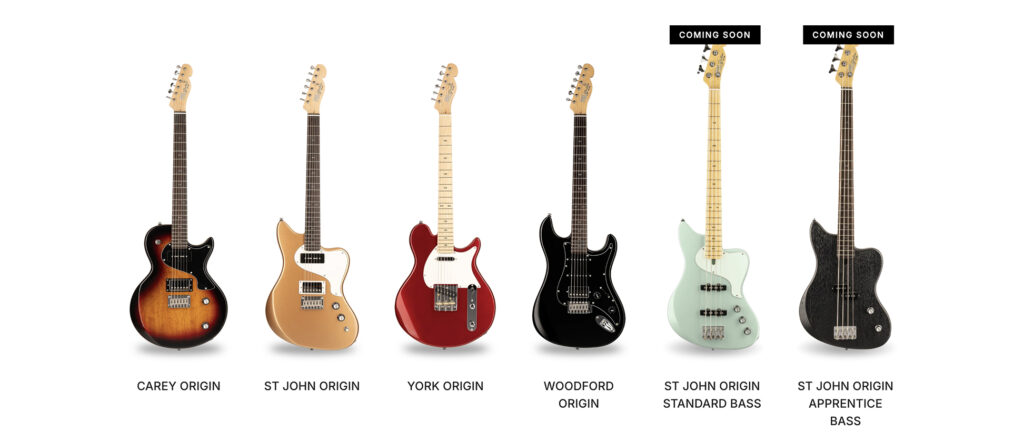
For Dovey, those details extend beyond appearance. Ergonomics and playability are central to the design process. He describes the fretboard as the guitar’s “user interface”, arguing that the instrument needs to look good enough to make someone want to pick it up, feel comfortable when they do, and ultimately deliver the sound that completes the experience. Distinctive inlays and other visual details are intended to give PJD guitars their own identity without sacrificing familiarity.
Sound is another area where Dovey has sought flexibility rather than a single defining PJD tone. The company winds its own pickups, with versatility being particularly important for the Origin Series. Rather than designing the guitars around one particular style or sound, PJD aims to give players instruments capable of covering a broad range of musical territory. The Custom Shop takes that approach further, with pickups hand-wound to suit an individual player’s requirements.
PJD’s growing presence in Australia and New Zealand has been helped by its relationship with F. Payton and Son. The connection developed through Dovey’s existing relationship with a New Zealand guitar retailer, who introduced him to Payton’s. Dovey was attracted to the Australian distributor’s family-business background and, importantly, its selective approach to distribution. Rather than attempting to put PJD guitars into every possible store, the strategy has been to work with selected dealers in different regions. The first Australian shipment sold out, with another shipment due in August and PJD’s new bass range scheduled to follow later in the year.
The Australian launch has already produced an encouraging result: a PJD Origin won Best in Show at the Sydney Guitar Show. Dovey was disappointed that he couldn’t attend the event in person, but he praised Payton’s for the way it represented the brand, including preparing staff with training material before the show. For Dovey, the relationship is about more than simply moving guitars into stores, he wants distributors and dealers who genuinely understand and support the instruments.
Keeping PJD guitars within reach of working musicians has also been a priority. In Australia, the Apprentice models sit below $1,000, while the Origin Standard and Origin Pro occupy progressively higher price points. Dovey says affordability has been part of the company’s philosophy from the beginning. Rather than compromising on quality, PJD has concentrated on selecting specifications that deliver the desired performance without unnecessarily increasing production costs. Playability remains a particular priority, and Dovey says the response to the Origin Series has reinforced that decision.
At the other end of the range, Australian players can also access PJD’s Custom Shop. Rather than simply offering a collection of highly customised guitars already sitting in a showroom, the Custom Shop is intended to provide a more personal, built-to-order experience. Dovey sees the Origin Series as a possible gateway into that world: a player can discover the brand through an Origin, then move towards an instrument designed specifically around their requirements.
Dovey is also deliberately taking a different approach to artist relationships. Rather than demanding exclusivity from players, he prefers the idea of musicians choosing PJD because they genuinely like the instruments. Among the artists using PJD guitars are British singer-songwriter Katie Melua, who bought one independently before PJD became aware she was playing it, Blur guitarist Graham Coxon, and members of UK band The Lottery Winners. For Dovey, these organic relationships are more meaningful than simply paying artists to endorse the brand.
The future of PJD is likely to remain centred on stringed instruments. Dovey isn’t particularly interested in expanding into pedals, although he has previously considered amplifiers. Acoustic guitars, however, are a possibility. PJD has already built a small number of acoustic instruments, and Dovey says he would eventually like to develop a proper acoustic range, potentially including both Custom Shop instruments and a more affordable series. He has a particular affection for parlor-sized acoustics, which he sees as ideal instruments for simply sitting on the sofa and playing.
International expansion is already underway, with Guitar Summit in Mannheim the company’s next major show and the PJD team preparing to display its Origin range, new basses and Custom Shop instruments. Dovey is also keen to eventually bring PJD to Australia himself, particularly as Payton’s expands its dealer network.
Dovey’s ambition is for PJD to become a recognised name among guitarists worldwide. He wants the company represented across North America, Europe, Asia, Australia and New Zealand, with PJD considered alongside the established names that have dominated the guitar market for decades. Artist relationships will be an important part of that growth, but the underlying goal remains straightforward … to build instruments that players genuinely want to pick up and play.