

By Greg Phillips
Music media personality, producer and Australian cultural icon Ian “Molly” Meldrum has died at the age of 83, after battling health issues for many years.
There are people who work in the music industry, people who make music, and then there are the rare few who become part of the music itself. Ian “Molly” Meldrum was one of those people. With Molly’s passing at 83, Australian music has lost something that can’t be replaced. He wasn’t just a television personality, a journalist, a producer or “the man in the hat”, but a man whose enthusiasm for music was infectious, whose curiosity knew no boundaries and whose belief in Australian talent helped change the course of our musical history.
I can’t even imagine what the Australian music landscape would look like without Molly’s influence. He may have fumbled and mumbled his way through interviews with artists, yet the message always got through. We did ourselves a favour and listened to his recommendations. More than anything else, he was a passionate fan of music, just like us.
Molly Meldrum made a significant contribution to Australian printed music journalism through his work with Go-Set, Australia’s first major pop music newspaper. Joining the publication in 1966, he wrote interviews, feature articles and a popular gossip column covering Australian and international musicians. He helped promote emerging Australian artists by giving them exposure and bringing their music to a wider audience. His enthusiastic, informal writing style made music journalism more accessible to young readers. Through his writing and industry connections, Meldrum helped shape Australian youth music culture and establish music publications as an important part of the Australian entertainment industry. Molly brought personality to music coverage.
I first came across Molly while I was working at Juke magazine. He’d always be at music functions, excited to experience a new artist releasing their latest recording. You’d walk into a room and feel his presence, whether he was in animated conversation with Michael Gudinski or Juke editor Christie Eliezer, or trying to badger Premier Artists’ Frank Stivala. Through his incredibly influential music spot on Hey Hey It’s Saturday, he would not only plug artists but also champion local music publications such as Juke.
Then there was Countdown! Has there ever been a more authoritative promotional vehicle for music, both locally and internationally, than the Meldrum-hosted TV juggernaut? An appearance on Countdown, or even a mention, translated immediately into album and ticket sales. Would Sherbet, Skyhooks or John Paul Young have been as huge without Molly’s nod of approval? I think not.
Molly knew music from all aspects, too. He famously produced Russell Morris’ epic hit, “The Real Thing”, and there are countless versions of stories about how he persisted in hanging around Armstrong Studios to be close to artists and contribute to the creative output. In my 2024 interview with the dearly departed studio owner and producer Bill Armstrong, he laughed as he recalled telling staff to lock the doors on Molly so he couldn’t interfere with proceedings.
Meldrum also produced hits for Colleen Hewett, Ronnie Burns, Supernaut and The Ferrets.
He brought the excitement of the world into Australian living rooms and, just as importantly, gave Australian artists a place on the national stage. He helped make local music something to celebrate, not something that needed an overseas endorsement before we believed in it. Legendary artists such as ABBA and Madonna have also acknowledged Molly’s influence in introducing their music to Australian audiences.
His interviews could wander into wonderfully unexpected territory, his words occasionally took their own scenic route, but nobody could ever question his passion. And perhaps that was Molly’s greatest gift. He never seemed to lose the excitement of discovering something new.
Molly often recounted that while he was in London, working around Apple Records and befriending John Lennon and Paul McCartney, Lennon casually told him that the Beatles were breaking up. According to Molly, he was so excited to be in Lennon’s presence that he wasn’t really listening and didn’t grasp the significance of what Lennon had just revealed.
His contribution cannot be measured simply in television ratings, awards or the number of famous people who called him a friend. It is measured in the careers he helped encourage, the records he helped bring into people’s lives and the confidence he gave Australian music to stand on its own two feet. Of course, Molly was never an ordinary character, and perhaps that is why Australia took him so completely to its heart. He was wonderfully individual, occasionally unpredictable and unmistakably himself.
Today, musicians, songwriters, industry colleagues and music lovers will each have their own Molly story. Some will remember a career-changing introduction. Others will remember a conversation, a laugh, a recommendation or simply the feeling that somebody out there was listening.
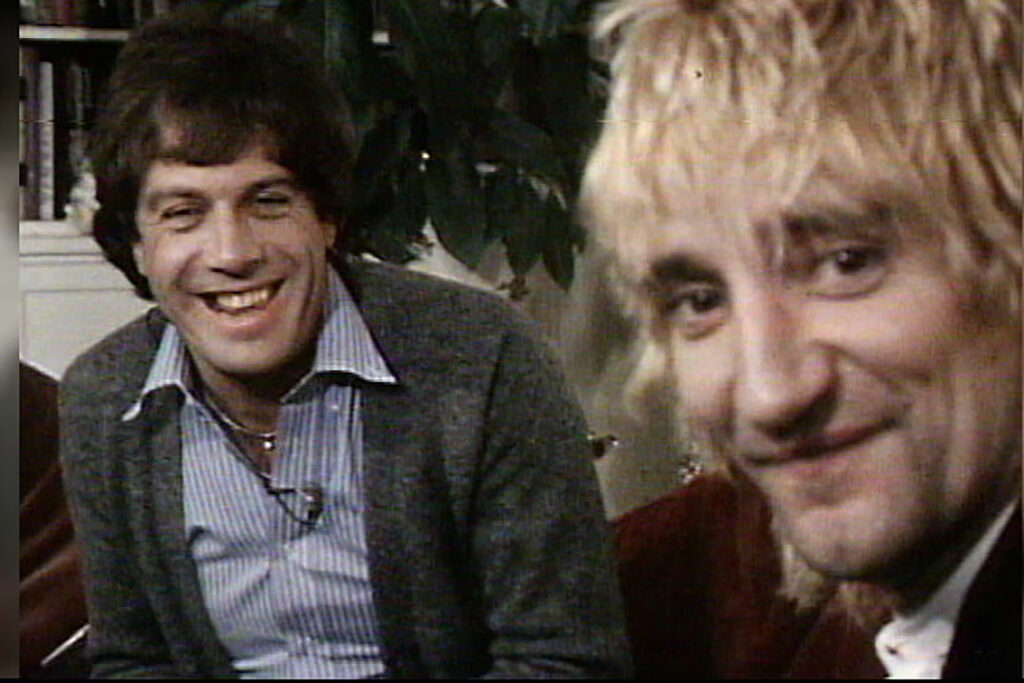
When I think of Molly, I think of Rod Stewart turning around to the camera with a look of disbelief after being asked a question by Molly, or Iggy Pop bouncing on his chair and calling Molly “Doll Face” (or was it “Dog Face”?), or Molly’s failure to complete a sentence while interviewing Prince Charles. He may not have been the most eloquent broadcaster, but without question, he was one of the most passionate and significant voices in music worldwide.
Vale, Molly Meldrum.