


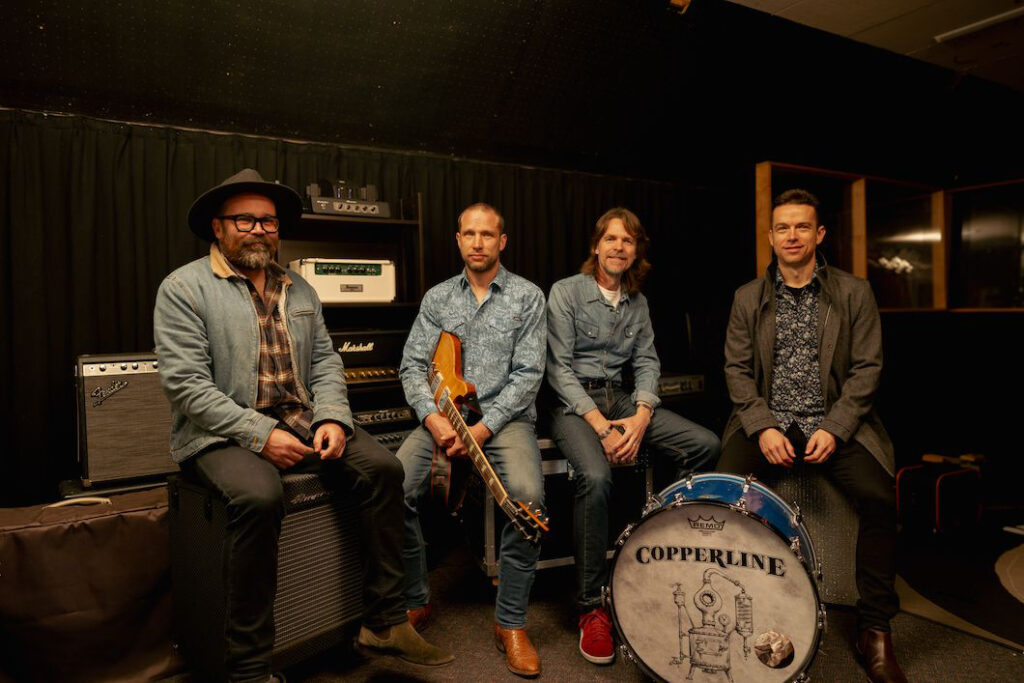
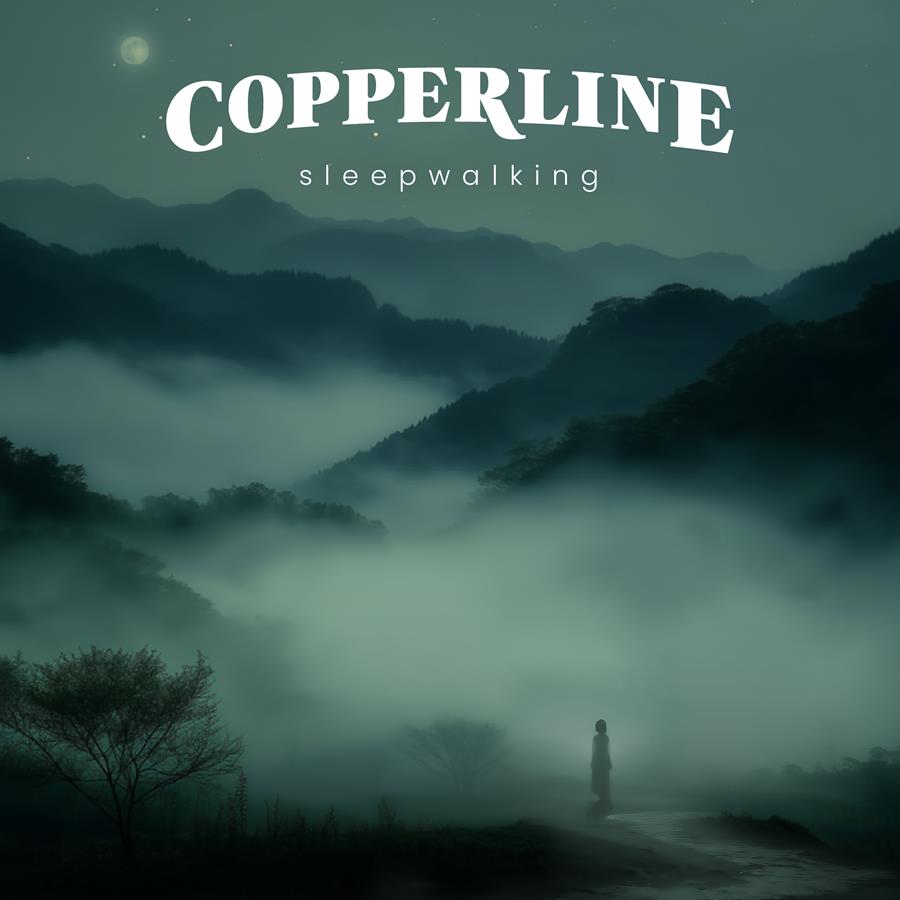
Australian country-rock outfit Copperline return with their third album, Sleepwalking, a contemplative collection of songs that finds frontman Brad Christmas wrestling with questions about life, perspective and the pressures of modern existence. Speaking with Australian Musician editor Greg Phillips, Christmas describes the album as a record shaped by reflection, experimentation and a willingness to let songs evolve rather than forcing them into predetermined forms.
MORE ABOUT THE INTERVIEW
Christmas’s musical influences stretch from the classic outlaw country songwriting of Kris Kristofferson, Johnny Cash and Willie Nelson through to Bob Dylan, Neil Young, Steve Earle and Lucinda Williams. Australian songwriting is equally important, particularly the way artists such as Paul Kelly have taken established musical traditions and used them to tell distinctly Australian stories. That combination of influences is reflected in Copperline’s approach, which draws on country and roots traditions while remaining grounded in contemporary Australian life.
The band itself was formed after its members had spent years playing in various other projects. For Christmas, Copperline represented a return to the fundamental reasons they had become musicians in the first place: writing original songs, recording them and performing them live. The band’s name came from James Taylor’s “Copperline”, chosen partly because the group admired the song and partly because of the imagery associated with the copper line running from an old whiskey still.
Christmas is also a writer outside music, having written poetry and short stories since primary school before moving into novels and professional writing. That background inevitably feeds into his songwriting. On Sleepwalking, the emphasis is very much on storytelling and observation, with Christmas using songs to explore ideas that have occupied his mind over several years.
The album’s songs were written over a period of roughly three or four years, with the first emerging within a month of completing Copperline’s previous record. Two of the earliest songs became particularly important to the album’s structure: the opening and closing tracks both emerged from Christmas’s habit of walking outside at night and looking at the stars. For him, looking up at the moon and night sky provides a sense of perspective and a way of clearing his head. Those songs effectively establish the album’s contemplative mood.
That sense of reflection runs throughout Sleepwalking. Christmas describes it as a record about “wrestling with things” that have been on his mind, many of which he believes are issues shared by people living in the present day. Rather than presenting straightforward answers, the album leaves space for listeners to consider their own responses.
The closing track, “Midnight Vagabond”, reinforces that approach. Its dreamy, almost hypnotic character mirrors the themes introduced at the beginning of the album, giving Sleepwalking a deliberate symmetry. Christmas says the song’s placement at the end felt musically natural, gradually fading into a more dreamlike space and hopefully, encouraging listeners to take their own thoughts away from the record.
One of the album’s more upbeat moments is “FOMO”, which tackles the increasingly familiar fear of missing out. Christmas sees that anxiety as something encouraged by the modern world, where people are constantly presented with questions about what they should be doing, where they should be and who they should be with. Rather than simply documenting that feeling however, the song is intended as an affirmation, Christmas’s own declaration that he is ready to turn his back on FOMO and reclaim the present moment. The band gave the track an Allman Brothers-feel, creating a more expansive musical setting for that idea.
That live approach is an important part of Copperline’s identity. The band has already road-tested around half of the Sleepwalking material, despite the album having been recorded more than a year before its release. Some songs have become regular parts of the live set, while others remain relatively unexplored on stage. Christmas says the band is comfortable allowing certain songs to stretch out in performance, particularly when the audience is responding to them. Some tracks move into extended, loose solo sections as the musicians respond to the atmosphere of the room.
Recording Sleepwalking also reinforced Christmas’s evolving attitude towards the studio. One of the biggest lessons he has learned since Copperline’s first album is to allow songs to change during the recording process. Rather than becoming too attached to an initial idea of what a song “should” sound like, he has learned to trust the producer and see where the music takes them.
That philosophy is closely connected to the band’s long-running relationship with producer Shane Nicholson, who has worked with Copperline across all three albums. Christmas admires Nicholson’s ability to identify what a song needs and find its individual sound, but particularly values his instinct for preserving the human element in a recording.
For Christmas, the best recording isn’t necessarily the most technically perfect one. He prefers performances that retain some imperfections if those imperfections contribute something distinctive and emotionally convincing. Nicholson’s approach fits that philosophy, with the producer deliberately avoiding an overly polished aesthetic in favour of finding the emotional heart of each song.
Nicholson’s studio also encourages experimentation. Christmas describes it as a kind of “play pen for grown-ups”, filled with unusual guitars, percussion instruments and other sounds that encourage musicians to move beyond the instruments they normally play. That environment helped push Copper Line towards more creative arrangements on Sleepwalking.
The album contains plenty of interesting instrumental details. Christmas played a real Wurlitzer on “Faint Praise”, while most of the keyboard parts were recorded using his Nord. He once owned and regularly transported a Hammond B3 and Leslie speaker, but the physical demands eventually made a modern keyboard a much more practical proposition. He also used his Gibson J-45 acoustic guitar on most of the album, an instrument he acquired after borrowing a Gibson J-200 and falling in love with its sound but deciding the more affordable J-45 was the realistic choice.
There are also signs of the band’s willingness to explore different musical territory. “Good Enough”, for example, represents Christmas’s attempt to write a genuine love song, something he admits has never come easily. His concern is that love songs can quickly become overly sentimental, clichéd or “naff”, making it difficult to find language that feels fresh, authentic and worthy of the emotion being expressed. “Good Enough” is therefore something of a personal songwriting challenge.
The 11 songs on Sleepwalking were selected from roughly 20 or more possibilities. Rather than simply choosing the strongest individual tracks, Copperline considered how the songs worked together as a complete record. Some were left off because they didn’t feel as though they belonged thematically with the others, although Christmas says the band rarely throws material away. Songs can be revisited, reshaped or cannibalised for ideas in future projects.
Beyond Copperline, Christmas has continued to work extensively as a musician-for-hire, including touring with Boney M. He has also performed alongside artists such as Steve Kilbey and taken part in tribute projects celebrating the music of Tom Waits. The latter was particularly significant for him because of his admiration for Waits’ songwriting and the challenge of dissecting the unusual architecture of those songs. Christmas sees such performances as a form of songwriting education, allowing him to look closely at how great songs are constructed.
For Copperline, the immediate goal is relatively straightforward … keep making music, build an audience beyond their New South Wales base and continue performing. The band has plans for further Australian shows, including a Sydney album launch and dates in New South Wales, with hopes of returning to Victoria and appearing at the Tamworth Country Music Festival in early 2027. Christmas would ultimately like Sleepwalking to receive a launch show in every Australian capital city.
There is no elaborate master plan beyond that. Christmas’s ambition is simply to find the next song, the next gig and, eventually, the next record. For now, Sleepwalking represents the latest stage in Copperline’s evolution, a record built around thoughtful songwriting, a willingness to experiment in the studio and an emphasis on emotional honesty over perfection.
SHOW DATES:
Saturday 22nd August – The Tourist Hotel – Queanbeyan, NSW
Thursday 3rd September – Mixtape Brewery – Sydney, NSW
Sunday 13th September – The Grand Junction Hotel – Maitland, NSW
Sunday 27th September – Link and Pin – Woy Woy, NSW