


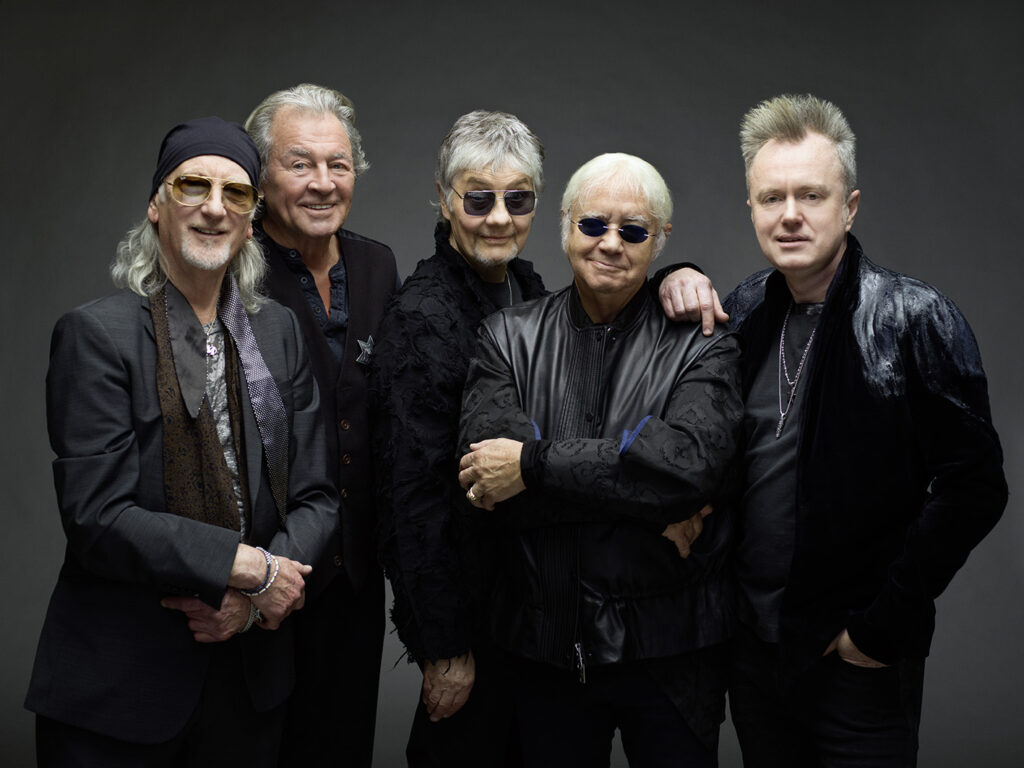
“When we did Now What?!, our first album (with Bob Ezrin), I started playing with the Vigier and Bob said, “You should try my Precision bass.” I said, “Why?” He said, “Well, I think it’s going to record better.” So he brought his Precision into the studio and it’s a legendary bass. It’s been on many of his records, Pink Floyd and Alice Cooper and Peter Gabriel and stuff. So I opened it up and the strings were dead. I said, “Well, I’ll give it a go. I’ll change the strings.” He said, “No, no, don’t touch the strings.” And he was right. It records beautifully. I don’t know if he’s ever changed the strings since then. He might’ve done once, probably once, but it’s become a habit and I use the precision in all our recordings now with him,” said Roger Glover when asked if he used his signature Vigier bass on the Splat! Album.
Roger Glover Interview by Greg Phillips
I feel profound gratitude that I was raised at a time that coincided with the release of some of rock music’s greatest albums. I can still recall placing the needle on the vinyl of Led Zeppelin 4, Black Sabbath 4 and Deep Purple’s Machine Head. I can even remember the smell of the newly opened packaging. Of course Zeppelin, Sabbath and Purple were the holy triumvirate, the pioneers of British hard rock, the forerunners of today’s heavy metal music. A new album release from any those bands and many others of the time were met with a great deal of anticipation. Radio would play it, fans would buy it and the charts genuinely reflected physical album sales. Sadly today, the shameless streaming services that supply the platforms that deliver most of the music, have no problem allowing AI music, created by prompts rather than human performance to compete with the output of real musicians.
All of the previously mentioned British rock bands featured skilled players but more importantly, together as a band they were bigger than the sum of their parts. Watching them interact with each other on stage and perform to a crowd of rock devotees was an experience that stayed with you long after the house lights had signalled the end of a show.
Despite many line-up changes over almost six decades, one of those bands has never stopped performing and in 2026 have recorded yet another quality album of rock music. On July 3 Deep Purple present their 24th album SPLAT!, released globally by the earMUSIC label.
With more than 120 million albums sold since first emerging in 1968, Deep Purple have earned their status as one of rock’s most influential bands. Songs such as Smoke On The Water, Black Night, Highway Star, Strange Kind of Woman and Burn to name a few are etched indelibly in the annals of classic rock history.
But rather than resting on a remarkable legacy, the British rock legends continue to push forward creatively. Reuniting with acclaimed producer Bob Ezrin, whose resume includes KISS, Pink Floyd, Lou Reed and Alice Cooper, the band has once again captured the power, musicality and fearless approach that have defined Deep Purple for more than five decades. Their new album, SPLAT!, tackles the idea of humanity’s end not through conventional apocalyptic imagery, but as a thought-provoking transformation beyond physical existence, adding another ambitious chapter to the band’s ever-evolving catalogue.
Australian Musician editor Greg Phillips had the honour of catching up with Deep Purple’s bass legend Roger Glover for a chat about the creation of the new album Splat! and discussed what makes the band tick.
Deep Purple’s new album Splat! Is coming out on July 3. Is the feeling of releasing a new Deep Purple album in 2026 similar to releasing a Deep Purple album in the ’70s?
They’re all similar. We don’t plan a record. We just get together, have a jam, and things appear. And that’s how it appears. And I think the fact that Simon (McBride) our new guitarist …. I mean, he’s a lot younger than us and he’s brought an energy to the band that we didn’t have for a while.
The album opens with a great rocker, Arrogant Boy, which really motors along. It actually gallops out of the gates. Was the song always played at that tempo? Do you try songs in different tempos before you arrive at the finished song?
No, that’s how it happened. That’s exactly how it happened. And when Simon started playing that lick, we all joined in and wow, it sounds great. And the song came after. We’re not the band that writes the songs and then goes and record them. It’s an evolving process.
The songs are all quite compact at around three to four minutes. Was that a conscious decision?
No. No. We just had a lot of ideas. There’s actually one song that we did that was a lot longer, but we had a deadline and we couldn’t finish it, but I think it would appear on the next album.
Is there still room for any of these new songs to stretch out live? Are you playing many of them on stage now?
Well … Arrogant Boy… once you’ve got to the end of it, I mean, to jam around a bit after it didn’t seem right. It says it all in that three minutes or whatever it is. But songs, yes, we do jam around. I mean, the thing is in a studio, you record it for the first time and it’s only when you start playing things live that you realise, “Oh, I could do this or I could do that. ” And that’s when it changes in the live experience. And of course, some songs don’t belong live. They’re gems by themselves on a record and there’s an atmosphere that you can’t replicate on stage. And you can’t do every song of an album. Well, we can’t. I think the only time we’ve ever done that was when we did Machine Head, the whole album Machine Head. But that wasn’t at the time. That was much later. That was decades later.
How would you describe Bob Ezrin’s production style?
Oh, there’s a certain magic about him. He brings us all together. He’s like the conductor as well as the producer. And he can see things we can’t see. You can’t see yourselves often, but he’s got that impartial look and can say things and we believe him. We trust him. (He’ll point out) any discrepancies in a chord, or this should be an F or a B flat or an A, and he’ll say, “Well, play them all. ” And then, “No, it’s got to be B flat,” or something like that. So he takes the weight off us if you like, of making those decisions.
What about specific bass suggestions? Does he say things like maybe play less here, play more here? What kind of notes does he give to you in regard to your bass parts?
No, he leaves it up to us to play what we play. He’ll make the odd suggestion about this, that and the other, but it’s very odd. It’s usually he works with what he’s given.
 The track Guilt Trippin’... there are a lot of notes, a lot of parts to that track. Did that one take longer than others to write and then record?
I’m trying to think now. I don’t think so. At times, I didn’t think it was going to be what it became, that’s for sure because it’s a complicated song, but I think it all comes together with the lyrics. That’s really what nails it. And it’s an odd song. I mean, Gillan and I write together frequently but on this album, I was just playing support to him. When we record the vocals, no one else in the band is there. It’s only me and him. And so I mean, he came up with some… I couldn’t write lyrics like that because they’re from his life and his innermost thoughts. And he’s a funny guy, a lot of humour. And I think that song in particular is such a ridiculous premise for a song. It’s sung by God! I could never imagine that in my life, but I love it. I do love it.
The song ends with the old fashioned fade out. Are you a fan of the fade out or would you prefer a song ends on a single note?
Both. Some songs demand an ending and some get a fade. I don’t know. That’s how it happens.
Let’s talk about the song Jessica’s Bra … who is Jessica and what’s up with her bra?
Well, to create a song with a spelling mistake in the title is again, a piece of ridiculousness. Have you heard the whole album?
Yes, I have.
Yeah. I haven’t listened to it in a while, but I can’t really remember them all yet.
Any particular reason why Splat!, the title track closes the album?
That was Bob’s Choice. Entirely Bob’s choice. He does a running order and we might say, “Oh, I don’t like that. ” But I don’t know why it’s the end one, but there it is.
13 tracks on the album. Were there many others you were playing around with that didn’t make the cut?
One or two. I don’t think there were many though. The first session we have is basically just over a week long and it’s actually very tiring to be that creative. And then once you’ve got about 20 or 30 ideas, then the next writing session is when we actually cull it down to things that are most promising or the most that we like. And then the next thing is Gillan and I get together and we sort out some lyrics and stuff and then we go to Bob Ezrin and he does the rest of the sorting out.
What is the decision-making process within the band? Do all members get a say or does majority rule or is it you and Gillan?
No, no. The band is a real band. We’re all leaders and we’re all members. So we share everything. And I think that’s really important because it takes away the fear of one person, having all the power. You can say what you like and that’s that freedom that you don’t always get with bands.
So in that case, are there songs that you are more attached to on this album than others?
I’m human!
Do you have a favourite?
Oh God, there’s quite a few favourites on it. There are very few things I don’t think are a bit under par or I don’t like the mix. It’s usually the mix that I get involved with. Being a producer myself, I listen to the mix and sometimes… I mean, Bob is actually open about that. He asks me what I think and I can make suggestions to him producer to producer and he sometimes he listens to me and sometimes ignores me. He’s his own man. He’s his own man. And the thing is we trust him.
Did you use your signature Vigier bass mostly on this record? Does that give you the versatility you need or do you have other basses in the studio too?
When we did Now What?!, our first album (with Bob Ezrin), I started playing with the Vigier and Bob said, “You should try my Precision bass.” I said, “Why?” He said, “Well, I think it’s going to record better.” So he brought his Precision into the studio and it’s a legendary bass. It’s been on many of his records, Pink Floyd and Alice Cooper and Peter Gabriel and stuff. So I opened it up and the strings were dead. I said, “Well, I’ll give it a go. I’ll change the strings.” He said, “No, no, don’t touch the strings.” And he was right. It records beautifully. I don’t know if he’s ever changed the strings since then. He might’ve done once, probably once, but it’s become a habit and I use the precision in all our recordings now with him.
Were any effects used on your bass parts?
Effects? No, I’m not an effects man. Bass has got to be pure. Occasionally a bit of fuzz on something, but it’s not very often.
You guys have been around for a while… you’re an old school rock band. What’s your relationship with technology been over the years? What have you seen as positive innovations and what don’t you like?
It’s hard to actually understand how different it was back in the ’60s and ’70s. I know what it was like and progress has been great. As soon as you got digital coming in and you could trigger things and all that stuff, I think we fell into that trap slightly in the 86, 87. We started triggering drums so the drums were more powerful and all that. And I think we quickly realised that it’s not us, that really what we are is really what’s best. You can’t help but get away from digital stuff. It makes it easier to edit for a start and ease of use. We’re actually in the studio, we play live altogether. Well, not vocalists, but the four of us instrumentalists. It’s always live because you play differently than if you’re just working to a backing track or a click track or something like that, you play together somehow. It’s a symbiosis that we have and we’re lucky.
When you are working on a brand new song in regard to the bass parts, does your first instinct usually stick or do you find that you try different approaches to a bassline before deciding how you’ll finally play it?
Well, by the time we’ve got to the studio, the bassline is usually what I started playing. Very, very few times Bob Ezrin may suggest something. I think one of the songs, oh gosh, he said, “I want you to bubble a bit more.” I can’t remember what the song’s called now, and sure enough, it worked. But really he works with what we give him most of the time. So it’s all instinct. I’m a songwriter. So everything I do is really in regard to the song. What the instrumental … what guitar and keyboards are doing is one thing, but what Paicey and I do together is another. So we stick together pretty much.
The musical relationship between a drummer and a bass player as the rhythm section of the band is incredibly important. Tell me about the chemistry playing with Ian Paice and how does it differ from playing with other drummers?
Well, Paice is unique. When I first met the band and I listened to what he was doing, I mean, it absolutely amazed me because he plays with a swing and most drummers play like a drum machine, but he doesn’t do that … it’s inherent in his feel. I remember one of the first things he said to me in 1969 was, ” I lead, I don’t follow..” And okay, got it because he can’t play any other way. That’s his upbringing. He’s basically a swing drummer at heart. He’s not a basher, but he still gets power … you can only hit a drum so hard. It doesn’t get any better, it gets worse. And the harder you hit it, the less you can move around it. And he’s like that. He’s constantly busy, if you like, certainly with the hi-hat and the in-between taps he does on the snare drum. And of course I blend in with that as much as I can and I can’t do anything else.
Great bands often seem to thrive on a certain amount of tension. Do you think complete harmony in a rock band is overrated? Can friction be a useful creative tool?
Of course it can, but it’s also the opposite. A happy band is a happy band and it’s just as creative and that’s all I can say. We get on with each other very well. We respect each other. We respect our differences and that means you can say what you think and you’re not going to hurt feelings.
As well as being a wonderful musician, you’re also a producer. What was the most valuable production lesson you learned from watching someone else in the control room?
Well, when I started recording in the ’60s with Episode Six, my first band, the producer was in his room, in the control room. You weren’t allowed in the control room back then. We were just mere musicians and you had to be invited into the control room, which was rare. So my experience of production was minimum. I didn’t know what went on. When I joined Purple, there was a decision not to have a producer because we felt we knew what we were doing. And so I kind of learned more about production in the ’70s with Purple than any other time.
And the problem with production, if you’re producing the band that you’re in, you don’t have a separate kind of space. You’re part of it. And so you can’t help but judge yourself and judge everything else and you want to please the rest of the band. And a good producer pleases himself. So although I enjoyed producing a lot, I’m really glad not to be producing Deep Purple. I’ve done enough of it. It’s a thankless task in a way. You spend far too many hours in the studio compared to everyone else in the band. And wearing three hats as a writer, as a player, and as a producer, it’s a couple of hats, too many really.
You mentioned your first band Episode Six before. If you ran into your younger self at an Episode Six gig, what advice would you have for him?
Well, we were looking for a song that would get in the charts, number one and we had no taste in that. We’d try anything as long as it was going to get us to number one. And of course it didn’t get us to number one. It got us nowhere, actually. And it wasn’t until I joined Purple that they had the opposite view. They weren’t interested in success. They were interested in music. And that’s when the great big bell in my head went off. Oh God, music! It’s not fame, it’s not celebrity, it’s not success, it’s not chart positions, it’s not popularity, it’s music. And that’s when it happened. So I’m a great believer in that. Stick to what you know, not what you think you know.
Deep Purple is widely credited as the first rock band to perform a fully integrated concert live with the symphony orchestra. What do you remember about that experience?
Oh, wow. Well, I joined the band after a recording session. They’d already taken Ian Gillan from Episode Six and Ian Gillan and I were a songwriting team. So that’s how I joined the band really. They were looking for a bass player and I came along and they seemed to like me and said, “Do you want to join the band?” Which is of course what I did. And then I got to know the people and the first thing I learned was that Jon Lord had written a concerto. Wow, that’s impressive. And yeah, you’re going to be performing at the Albert Hall. Wow, what? It was a very steep and sudden climb to that awareness. And I was actually very proud of Jon for having done it, but that’s what Deep Purple is in a way. It’s a combination of these influences.
Ritchie was a rocker and had been around for a long while and had a good reputation. Jon Lord was classical and blues … a learner if you like. Paicey was a swing drummer. Ian Gillan was a voice and I did the best I could and it worked. And my inclinations are much more to softer music, to more folky traditions. It was a folk thing and Skiffle. Skiffle was my start. I don’t know if you had Skiffle in Australia, but there was a huge deal in England. Lonnie Donegan was a king. So that was my upbringing and I still have that. I’m more poetic and Gillan’s more rebel!
What do you hope people get out of listening to this new album?
Oh, I don’t hope for anything. I don’t expect anything. Expectations can run too high and people can criticise whatever they like. I don’t care. If you like it, great. If you don’t like it, that’s great too.
So when might we see Deep Purple back in Australia again?
Well, that would be nice. We don’t make those decisions. Ever since the get – go, the band makes the music and everything else is done by the management and agent. And I think that’s on purpose because they never tell us what to do and we don’t tell them what to do. So we don’t have much of a say in it. Yeah, I’d love to come back to Australia. I’ve always loved being there and yeah, I miss it. Yeah, I’m sure it’ll come back soon … next year?
One more and I’ll let you go. What are you most proud of in your music career?
Gosh, I’m proud of my good fortune, how it all happened. I’m writing a book, so I’m putting it in perspective about how it all happened and it absolutely flaws me the sequence of events that me ending up in a band like Deep Purple. And I’ve written songs and I’ve given a lot to Deep Purple. So proud is not really the good word to use. I’m not self-priding. I just do the best I can, but I’m more than lucky to still be around doing what I love.
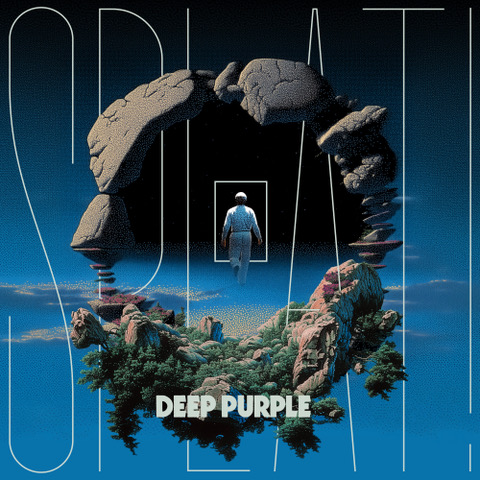
Further exclusive fan items are only available on the official SPLAT! shop.
https://deep-purple-uk.allotment.pro/
Ian Gillan sums it up: “Deep Purple is in a great place right now.”
Splat! is out now