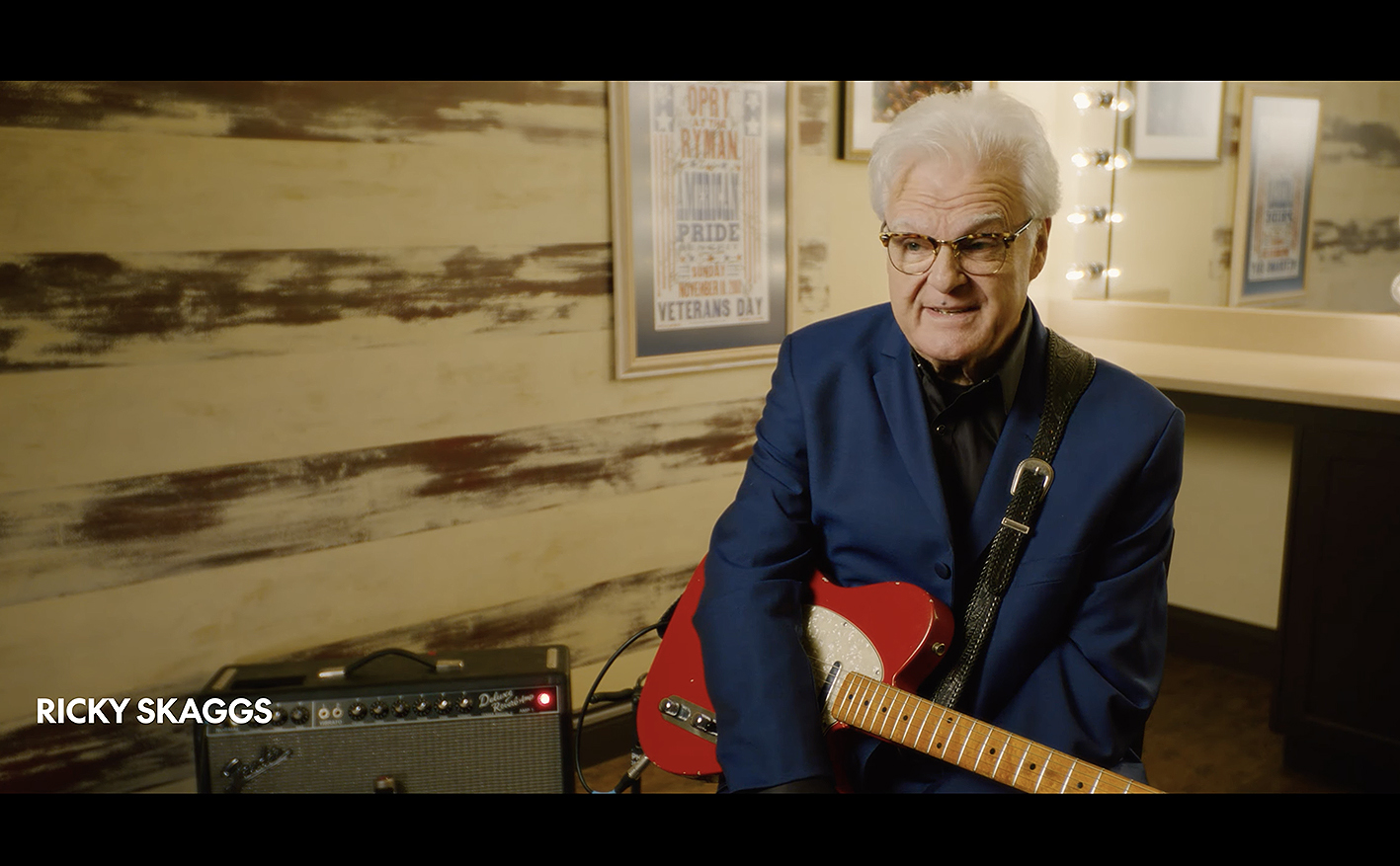


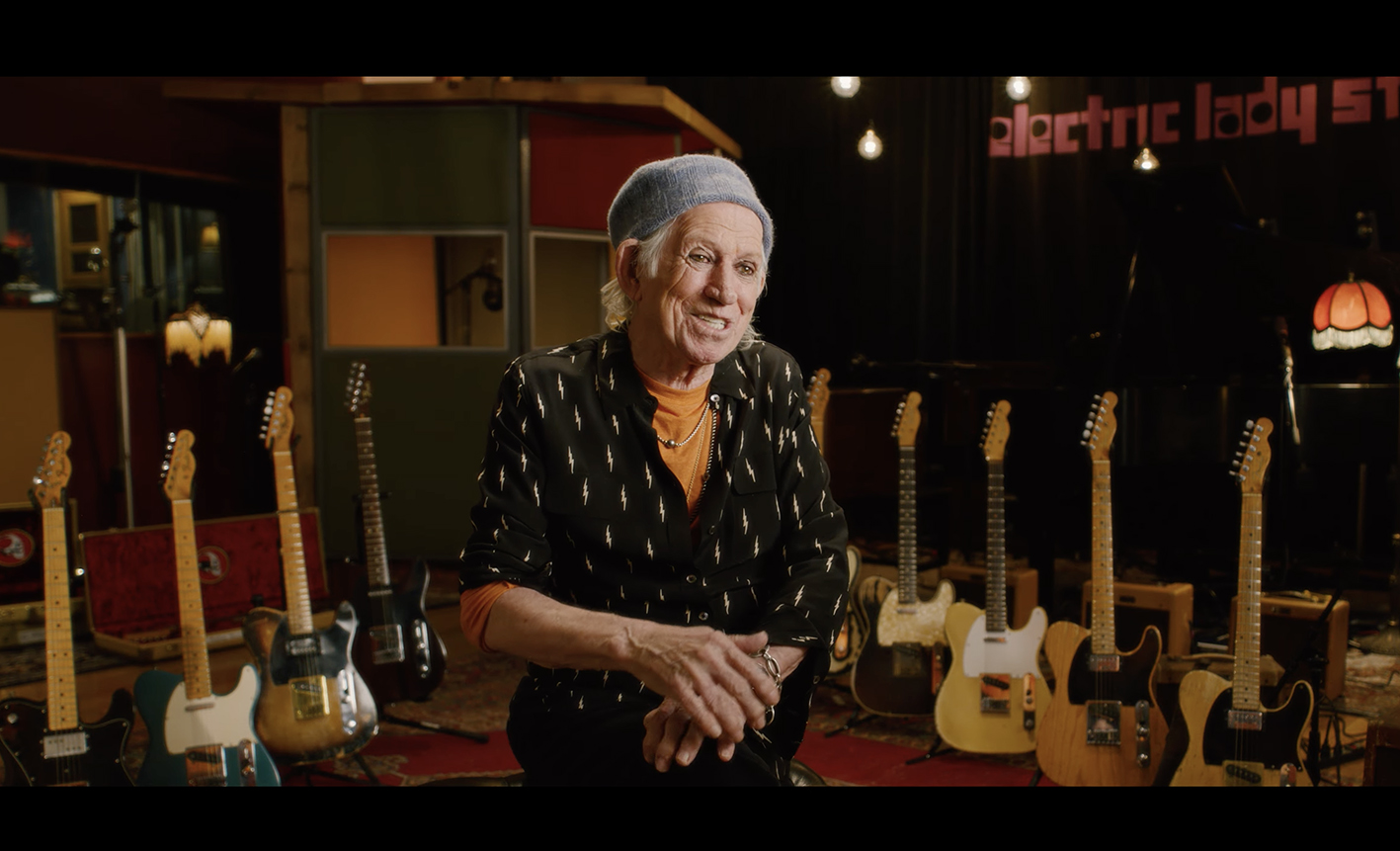
Fender is closing out an interesting year-long celebration of 75 years of the Telecaster with the premiere of The One That Started It All., a new celebration film honouring the guitar that helped shape modern music and the artists who continue to redefine what it can sound like.
Featuring interviews with Keith Richards, Bruce Springsteen, Brent Mason, Sheryl Crow, Vince Gill, Joe Bonamassa, Keith Urban, Julien Baker and more, the film brings together generations of artists who have each made the Telecaster entirely their own. From the raw edge of Jack White and Julien Baker to the rock legacy of Bruce Springsteen and Keith Richards and the country and Americana voices of Vince Gill, Sheryl Crow and Zach Top, the film captures the remarkable range of sounds and styles that have come from one essential design.
WATCH NOW: The One That Started It All. – our love letter to the Telecaster.
The film also looks beyond the artists to the people and craftsmanship behind the instrument, including Abigail Ybarra, Fender’s legendary master pickup winder who worked directly with Leo Fender and helped shape the sound of countless iconic instruments.
The One That Started It All. is a celebration not simply of where the Telecaster has been, but of the artists continuing to take it somewhere new.
This Fender film is a celebration of the 75-year history, design, sound and cultural impact of the Telecaster, told through a combination of Fender historians, guitar experts, collectors and a remarkably diverse group of musicians. Rather than simply documenting the guitar’s development, the film explores why an instrument that began as an intentionally simple, practical design has become one of the most influential and enduring electric guitars ever made. Its central argument is that the Telecaster’s greatest strength is its ability to get out of the player’s way, providing a clear, responsive foundation on which individual musicians can impose their own style.
The film traces the Telecaster back to Leo Fender’s early work with lap steel guitars in the 1940s, following the instrument’s evolution through the Esquire, Broadcaster and short-lived Nocaster before it became the Telecaster. It emphasises Fender’s unusual approach: Leo wasn’t a guitar player, so he relied heavily on feedback from musicians, effectively acting as an engineer and listener rather than a traditional instrument maker. The resulting solid-body, bolt-on-neck construction was designed to be durable, affordable and easy to manufacture and repair, making the Telecaster a practical “working man’s” instrument.

Considerable attention is given to the engineering behind the Telecaster’s distinctive tone. The film examines its pickups, bridge and metal construction, explaining how seemingly simple design decisions produce the familiar combination of snap, bite, twang, clarity and attack. It also looks at the various evolutionary changes to woods, necks, wiring, pickups and construction, including the development of the Thin Line and Wide Range humbucker. Yet the film stresses that the fundamental platform has remained remarkably consistent because the original design simply worked.
The second half becomes increasingly focused on the relationship between the Telecaster and its players. Country and Bakersfield pioneers, blues and rock guitarists, punk and alternative players, metal musicians, jazz players and contemporary artists all describe finding different possibilities in essentially the same instrument. James Burton, Keith Richards, Bruce Springsteen, Tom Petty, George Harrison, Chrissie Hynde, PJ Harvey and others are referenced as part of a lineage that demonstrates how far beyond country music the Telecaster has travelled. Its use by players in Japan, Korea, China and elsewhere further reinforces the guitar’s international influence.

A recurring theme is simplicity as a form of creative freedom. Several musicians describe the Telecaster as a basic tool that doesn’t dictate how it should be played. Its relatively straightforward design leaves the personality, technique and imagination of the guitarist exposed. One contributor compares it to a simple ingredient such as bread: fundamental, adaptable and capable of becoming something very different depending on what the artist does with it.
The film also demonstrates how musicians have continually modified and personalised the Telecaster. Stories about treasured vintage instruments, road-worn guitars, customised electronics and unconventional setups illustrate that the guitar’s simplicity encourages experimentation rather than preventing it. Even musicians working in genres where the Telecaster isn’t traditionally associated with the instrument have adopted it precisely because of its ability to challenge expectations.
The Telecaster is presented as an instrument that has accompanied 75 years of popular music without becoming trapped in any one genre or era. Fender’s closing message looks ahead to another 75 years, suggesting that as music and technology continue to change, the Telecaster’s simplicity, versatility and ability to translate an artist’s individual voice will keep it relevant.