


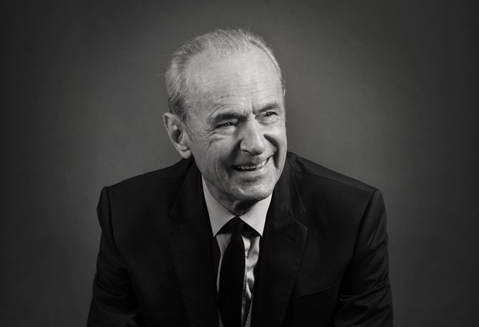
After more than five decades as the driving force behind legendary British rock band Status Quo, guitarist and singer Francis Rossi is still finding new ways to surprise himself. His latest solo album, The Accidental, began almost by chance, sparked by casual songwriting sessions and a reluctant decision to step back into the studio. The result is a record shaped by experimentation, humour and the freedom of working outside the expectations that come with his famous band. Rossi spoke with Australian Musician editor Greg Phillips about the accidental nature of the project, recording in the digital era, and why even after all these years he still gets a buzz from picking up a guitar.
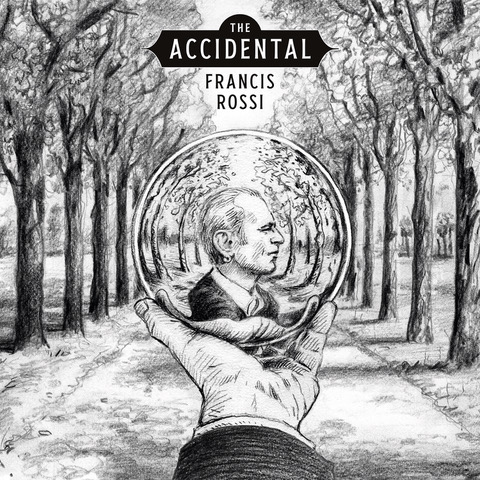
Tell me about the new album The Accidental. It’s not the name of a track-why did you decide to call it that?
Well, you’re always looking for titles for a start, but the album itself came about accidentally. There were a series of accidents that happened while making it too. Something would happen during recording and it would turn into a nice accident. Initially I didn’t want to make a record at all. I’m old school, you don’t sell records anymore, and the idea of making music in my studio and then losing money just didn’t compute for me. I grew up in retail, so that mindset stuck.
I’d been writing with a guy called Hiram, he has one of those long Sri Lankan names and I’ve known him since he was about 12 because he went to school with one of my sons. We wrote a few structures of songs together. No lyrics yet, just the beginnings of things. Then he said, “Do you want to record them?” and I said no for the same reasons I just mentioned. But he talked me into it. We went into the studio the next day and recorded three tracks. When I got home I said to my wife, “I really enjoyed that.” She rarely comments on anything I do, but she said, “Well, why don’t you do more?” And that was really how it started.
The creative process, whether you’re writing a song or learning one, has something about it that’s just delightful. It’s like sucking your thumb. I realised that even if nothing ever came of it, I enjoyed doing it. So the project just kept going. There were no parameters, no one saying it had to sound like Quo or had to fit into a particular style. We just recorded tracks and saw what happened. With all the little accidents along the way, the title The Accidental seemed perfect. Someone even told me it was grammatically incorrect, which made me want to use it even more. I just like the look of the word.
The track “Picture Perfect” has a very un-Status Quo intro. How did that come about?
That was one of the accidents. When we’re working on the computer you’ve got all these blocks of audio and sometimes I’ll say, “Move those four bars there” or “Take that out.” When you start chopping things around, occasionally something ends up out of place in a good way.
You listen to it and suddenly think, “I quite like that.” So we’d sometimes leave something at the start and say, “Let’s look at that tomorrow.” Then I’d hear it in the morning and think it worked.
If it had been a Quo album there would’ve been limits. Over the years fans would say, “That’s not a Quo song.” And I’d think, “Well I wrote it, sang it and played it!” But you become aware of those expectations. With this album I thought, there’s no reason I can’t try something different. It’s just me. If people don’t like it, that’s fine.
Do you enjoy working in the digital recording world now?
Yes, I do. I remember when we had the old MCI machines with the big tape reels. If you wanted to move to another section you had to stop, rewind, take the reel off, find the other tape, thread it up, rewind it again and by the time you were ready you’d already heard the track three times. With a computer you just press play and it’s exactly where you left it.
Some people talk about loving the sound of tape, the compression and all that but I always say the important thing is the song. If you like the song, you like it. It’s not suddenly going to be brilliant just because it was recorded on tape. Digital gives you flexibility and a lot of creative possibilities you just didn’t have before.
You’re known for those great electric guitar parts in Status Quo. Do you traditionally write songs on electric or acoustic guitar?
Almost always on acoustic. Occasionally on electric. There’s a song called “On and On” I wrote while living in Ireland looking out of a turret window in a castle. I had a tiny amp there. But most of the time it was acoustic. These days I like having ideas on my phone. The moment you pick up a guitar something often happens, a little riff or phrase and now you can record it instantly. Two days ago I recorded something I’d had sitting on my phone for over a year. You couldn’t do that in the old days.
What guitars and amps did you use on the album?
A mixture. Sometimes real amps, sometimes amp simulators. I’ve got a lot of amps around, old Vox AC30s, Fenders and so on but I also use amps in the box. People sometimes say a song would sound better if you’d used a particular amp, but again it’s really about what you’re playing.
The famous Telecaster everyone associates with me, I actually had three that looked like that. One eventually got to the point where it wouldn’t stay in tune anymore after so many repairs. Someone suggested auctioning it and it went for about £125,000 at the time, which seemed like a lot of money.
You’ve got an upcoming European and UK tour. Have you started rehearsing yet?
Rehearsals start soon. Most of the material we did last November, but the show has evolved. Originally it was just meant to be me talking on stage. The promoter asked if I wanted to bring a guitar and I said no. But I ended up playing a song and there was something about being in front of a small audience again, 150 or 200 people.
Gradually I added more songs. Some Quo songs didn’t work straight away with just two acoustics, but we found ways around it. Sometimes we add a bit of drive to the acoustic sound so it still has that energy. It’s been building slowly and it’s doing very well in England now. Taking it to Europe is exciting, although I’m always nervous beforehand. I stand at the side of the stage thinking, “What am I going to do?” Then I walk out and something happens. If I can make the audience laugh, that helps too. Though some people think rock musicians shouldn’t be funny.
Status Quo were always an incredibly tight band. Where did that musical lock come from?
Probably from playing together for so long. Rick and I grew up playing together from when he was about 16. He had a very aggressive right hand and we developed a certain feel. Only recently did I realise how particular that style is. When I started playing with Andrew Brooke I could hear when something wasn’t quite right. The shuffle patterns are subtle, sometimes all downstrokes, sometimes a particular upstroke in the middle. A lot of guitarists think Quo music is easy, but when you try to explain the exact feel it’s harder than it looks.
What are the chances of bringing this acoustic show to Australia?
I’ve been asked about it, but it’s quite a small operation. It’s just me, Andrew, a front-of-house guy and the lady who looks after us. Everything travels on a bus. To get to Australia you’d need the finances to make it work. So I can’t say it will happen but over the years I’ve often said something won’t happen and then it does. So who knows?
Tracklist CD/LP:
Side One
1. Much Better
2. Go Man Go
3. Push Comes To Shove
4. Back On Our Home Ground
5. Dead Of Night
6. Going Home
7. Bye My Love
Side Two
8. Something In The Air (Stormy Weather)
9. Picture Perfect
10. November Again
11. Things Will Get Better
12. Oh So Good
13. Beautiful World
14. Time To Remember
Francis Rossi online:
https://www.francisrossi.com
Facebook
Instagram
Status Quo online:
www.statusquo.co.uk
Facebook
Instagram