

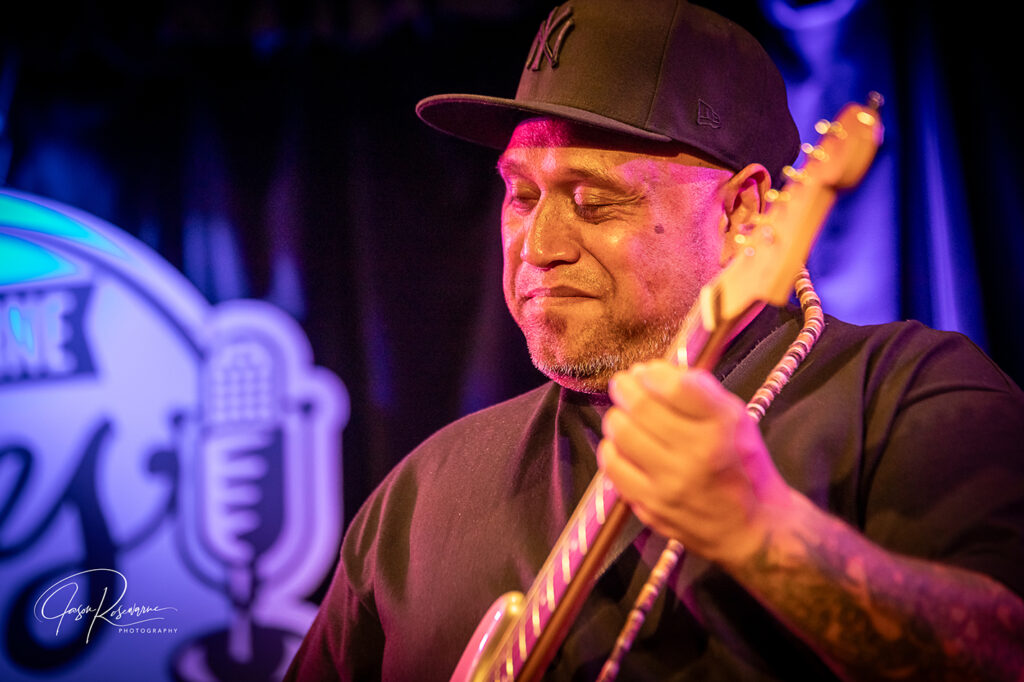
After four years away from the spotlight following a life-altering stroke, Melbourne blues guitarist and singer-songwriter JESSE VALACH is making a powerful return with his deeply personal new album, Stroke of Luck. Long regarded as one of Australia’s most passionate blues performers, sharing stages with the likes of Russell Morris, Jeff Lang and Lloyd Spiegel, Valach’s comeback story is one of resilience, perspective and rediscovered purpose. In this candid interview with Australian Musician, Jesse Valach reflects on the devastating impact of his 2021 stroke, the emotional road back to music, the support of Melbourne’s tight-knit blues community, and how Stroke of Luck became both a creative rebirth and a testament to perseverance. Jesse is looking forward to his upcoming gigs including the Echuca-Moama Winter Blues Festival in July.
AM: First of all Jesse, congratulations on a quality album release Stroke of Luck, not just because of the battles you overcame to create it but musically it’s a world class effort. You had a stroke in 2021 which changed your life. Tell me about where your music career was at before the stroke and what you had to put on hold.
Jesse: Before the stroke, things were really starting to build naturally for me. I was gigging consistently, travelling, writing and recording, and beginning to establish myself properly within the Australian blues and soul scene. I’d been lucky enough to share stages with artists I admired and there was a lot of momentum building after Memphis and the earlier releases. When the stroke happened in 2021, everything stopped overnight. Playing guitar, singing and performing suddenly became difficult, and I had to put touring, recording and a lot of future plans completely on hold while I focused on recovery. There was a period where I genuinely didn’t know if I’d ever return to the stage or play guitar the same way again.
You represented the Melbourne Blues Appreciation Society at the International Blues Challenge in Memphis, Tennessee in 2017. What can you remember of that experience?
Memphis was surreal. As a blues musician, it feels like sacred ground. Walking down Beale Street and soaking in the history of the music was something I’ll never forget. Representing the Melbourne Blues Appreciation Society was a huge honour. The biggest thing I remember was the connection between musicians from all over the world. Everyone was there purely because they loved the blues, and it gave me a lot of confidence and inspiration moving forward.
Who were the guitarists and artists that inspired you to play guitar as a kid?
I grew up loving expressive players — musicians that could really make you feel something. Robert Cray/Stevie Ray Vaughan was a huge influence. Gary Clark Jr., Eric Gales and Jimi Hendrix all had a big impact too. Closer to home, musicians like Lloyd Spiegel, Geoff Achison and Ray Beadle showed me what was possible as an Australian blues artist.
 What was the starting point for the Stroke of Luck album? Had you written or recorded any of it prior to your stroke?
Some ideas existed before the stroke, but the album really became what it is afterwards. The title itself reflects that strange feeling of surviving something catastrophic and trying to find meaning in it. A lot of the songs were shaped by recovery, frustration, gratitude and reconnecting with myself through music again. Recording the album became part of my rehabilitation emotionally and creatively. It wasn’t just about making a record, it was proving to myself that I still had something to say.
What has been the worst effect of the stroke on yourself personally and your career?
The hardest part was probably losing confidence in myself. Physically there were challenges, but mentally it was incredibly tough because music had always been such a huge part of my identity. There’s grief that comes with something like that too, grief for the version of yourself before everything changed. Career-wise, all momentum disappeared overnight. But I’ve learned that recovery isn’t linear and sometimes the small victories become the most important ones.
Jesse, this is a great story of hope, persistence and resilience. What are the biggest positives that have come out of this journey?
Perspective, definitely. I appreciate things now in a way I probably never did before. Playing one show now means more to me than ten shows might have previously. The journey also showed me the strength of the people around me, family, friends, musicians and supporters who never gave up on me. Creatively, I think it also made me more honest. There’s less ego involved now and more focus on connection and authenticity.
Who are some of the key people who helped you to make this record?
My wife Adriana has been incredible through all of this. There were moments where I genuinely doubted whether I could come back, and she carried a lot emotionally and practically throughout the recovery.
The Testaments band was also a massive support. The Blues Roulette guys were incredibly supportive personally helping to get me back on stage again. The Melbourne blues community and MBAS have always backed me too.
Is there a track on the album that is closer to your heart than others?
“Testify” is probably the most personal track for me. It feels like the emotional conclusion to the whole record and there’s a vulnerability in it that was difficult to put into words. “All In This Song” is also really special because it captures that soulful side of what I love musically and emotionally.
As well as featuring some great guitar licks, it is a very soulful album too. “All In This Song” is a great example. Where did your love of soul come from?
Soul music has always connected with me because it’s honest music. Artists like Otis Redding, Sam Cooke and Al Green could make you feel heartbreak and hope in the same song. I’ve always loved blues, but soul music taught me the importance of phrasing, emotion and singing from a real place rather than focusing purely on technique.
What guitars did you use in the making of the album?
A lot of the album was recorded with my Fender Robert Cray Strats. I’m not overly precious about gear though, for me it’s tone.
What’s your current stage rig?
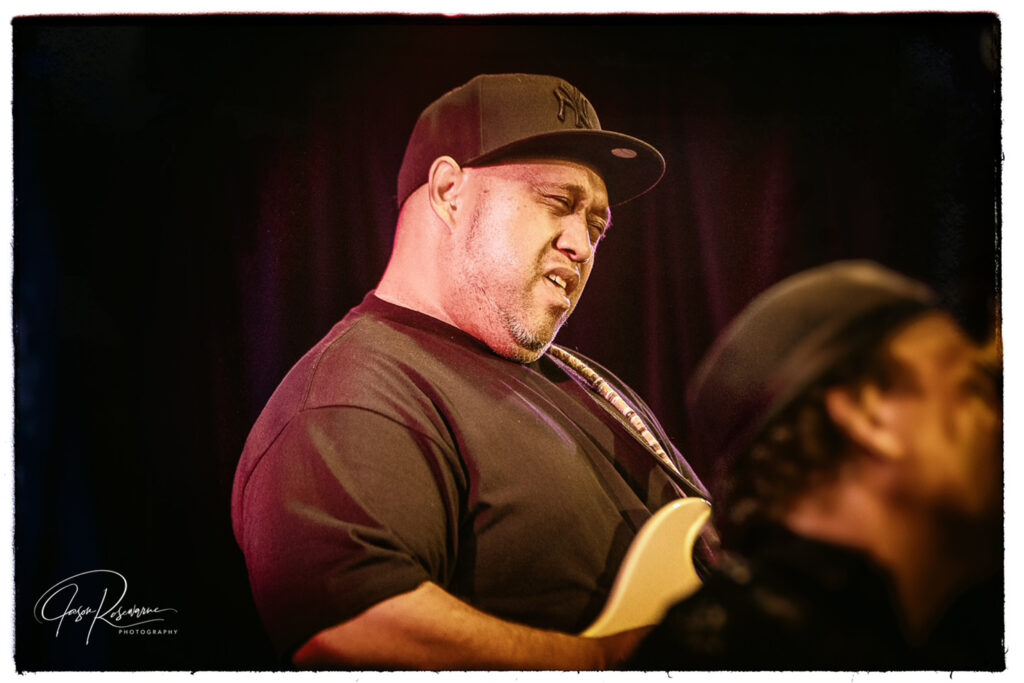
I keep things pretty straight forward. Fender-Mex Robert Cray Strats guitars into my Blues Jnr’s customised by Lucas Miles couple pedals Tubescreamer, Boost, and lil delay. After the stroke I found myself simplifying things and focusing more on touch and feel rather than overcomplicating the setup.
Where are you at with performance now? Have you got a lot of your confidence back?
It’s definitely still a journey, but the confidence is coming back with every show. Early on, just getting through a set felt huge and I was riddled with anxiety. Now I’m learning to enjoy performing again instead of overthinking it. I don’t think I’m the same performer I was before the stroke but honestly, that’s not necessarily a bad thing. There’s probably more honesty in what I do now.
You’re starting to gig quite a bit, how does it feel to be back on stage?
There were moments where I thought that part of my life might be over completely. Now every gig feels like a privilege. There’s a connection with audiences now that I definitely don’t take for granted anymore.
You’ve had a great association with the Blues Roulette guys and released a great EP with them. Tell me how you met and what it’s been like recording and playing with Ben and Johnny.
We met through the blues scene and instantly connected musically. Ben and I have been in the blues scene going on 20 years together. They are incredible musicians but also genuinely great people. Playing with them feels natural because there’s trust there. They understand groove, dynamics and serving the song, which is really important to me.
You’re playing the ECHUCA MOAMA WINTER BLUES FESTIVAL in July. Have you played it or been to it before and what are you looking forward to most about this festival?
Winter Blues is one of my absolute favourite festivals I have performed at. The atmosphere, the community and the love for live music there is really special. I’m looking forward to seeing some artists that I am huge fan of and just being part of such an iconic Australian blues festival.
Who will be in your band for Winter Blues and other gigs going forward?
The Testaments lineup around players who really understand the songs that we have recorded. My day 1 brother on Drums Anthony Murray, Declan Stewart on Bass, Charlie Rolfe on Keys, Imre on Sax, Oskar on Trombone and my beautiful Daughter on joining me on BV’s. And of course we also have on 2nd guitar duties Justin Yap. I’m lucky to have musicians around me who genuinely care about the songs and the journey behind them.
What does the future hold for Jesse Valach? What are your hopes and dreams and have they changed since before the stroke?
Before the stroke, success probably meant bigger gigs, touring and industry milestones. Those things are still exciting, but my priorities have definitely shifted. Now it’s more about creating meaningful music, connecting with people and continuing to grow creatively while I’m here to do it. If my story helps somebody else keep going through a difficult time, then that means just as much to me as any career achievement.
I’d love to continue touring, recording and building Jesse Valach & The Testaments into something lasting — but mostly I’m just grateful to still be able to pick up a guitar and do what I love