

Review: Greg Phillips. Photos: Jason Rosewarne.
As Australian punk pioneers The Saints declared back in 1978 … “Know Your Product!” Read the label, do your research and know exactly what’s in the box. While selected songs from Massive Attack albums such as Blue Lines, Protection or Mezzanine may have been the soundtrack to many chilled summer nights at home or dinner parties with friends, it doesn’t necessarily follow that a live concert by the band in 2026 will provide the same comforting feels. Sure, there’ll be familiarity, nostalgic moments and even a smile, but your concert ticket will offer you so much more. Of course, if you’re a die-hard fan, you already know this.
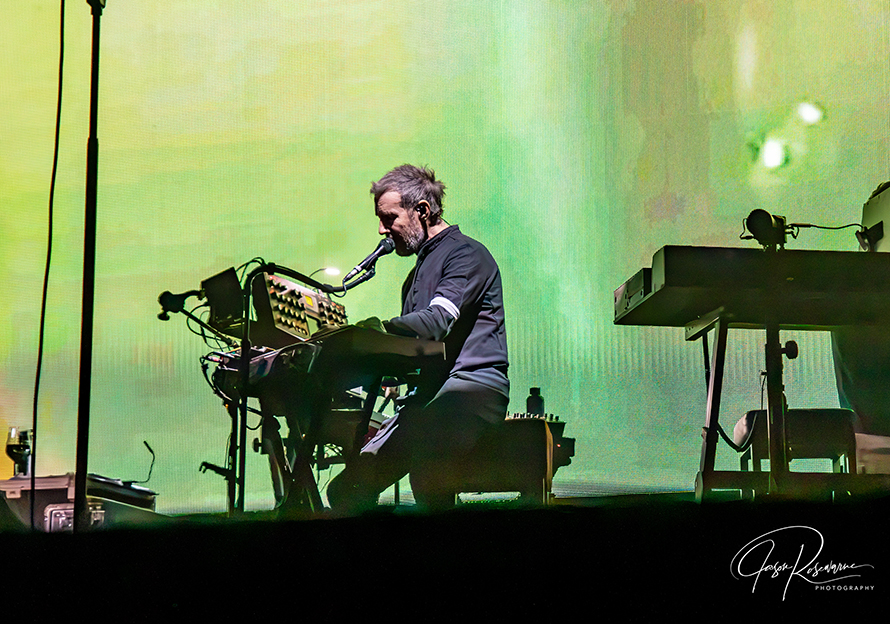
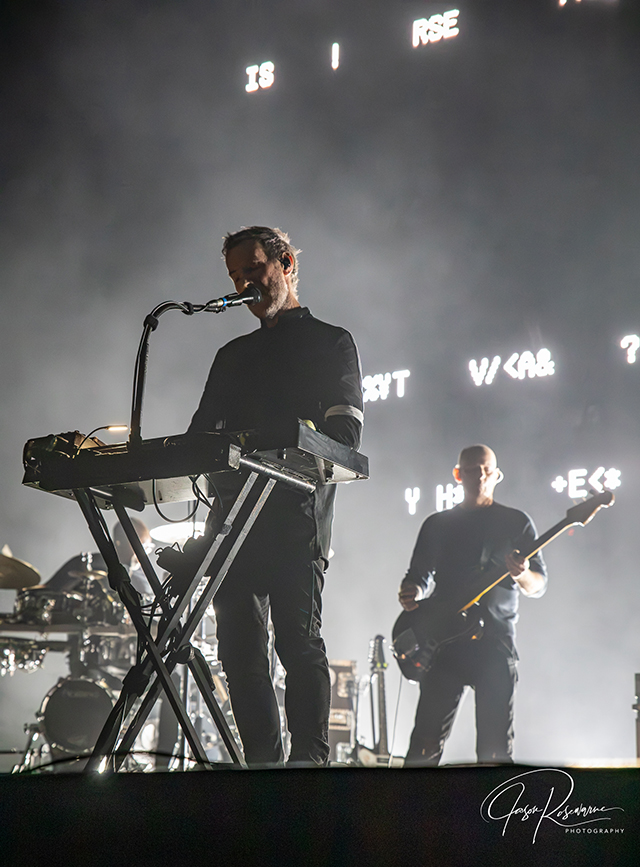
Massive Attack have never been particularly interested in the idea that a concert should simply be an evening of entertainment. For more than two decades, the Bristol collective have used their live shows as a collision point between music, politics, technology and uncomfortable questions about the world outside the venue. Their current production takes that philosophy to an even more confronting level.
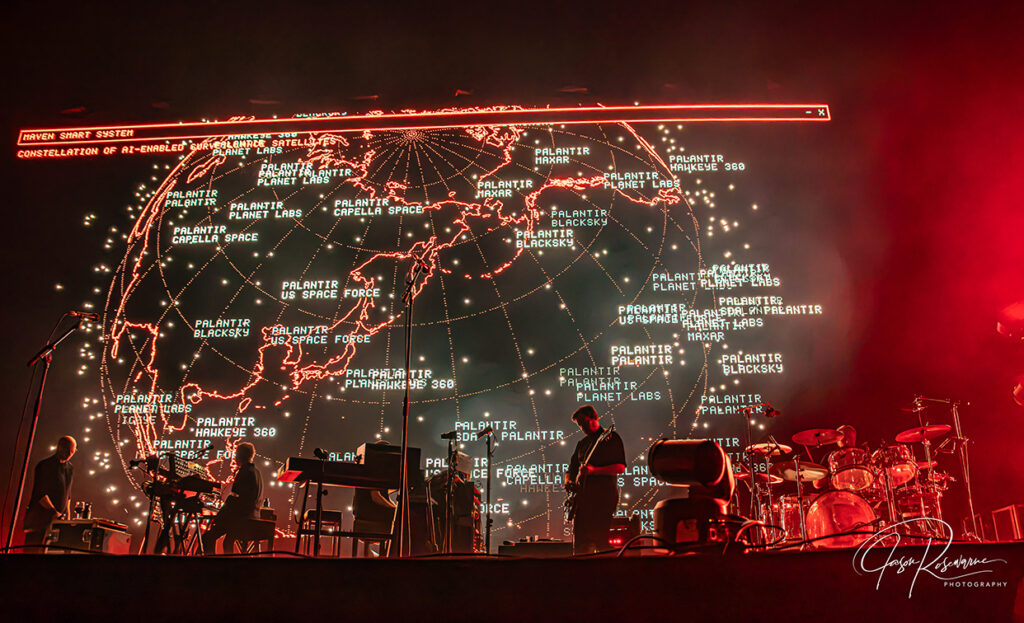
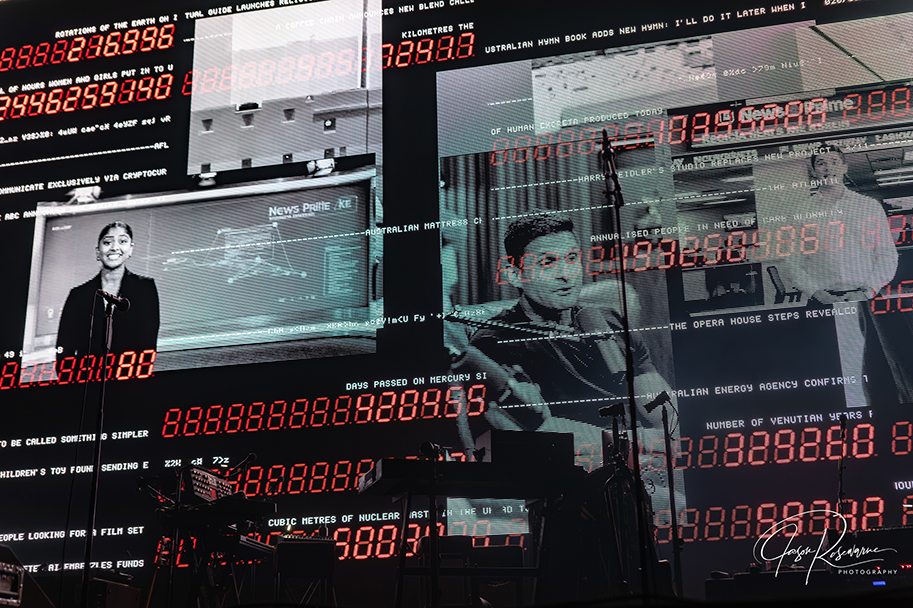
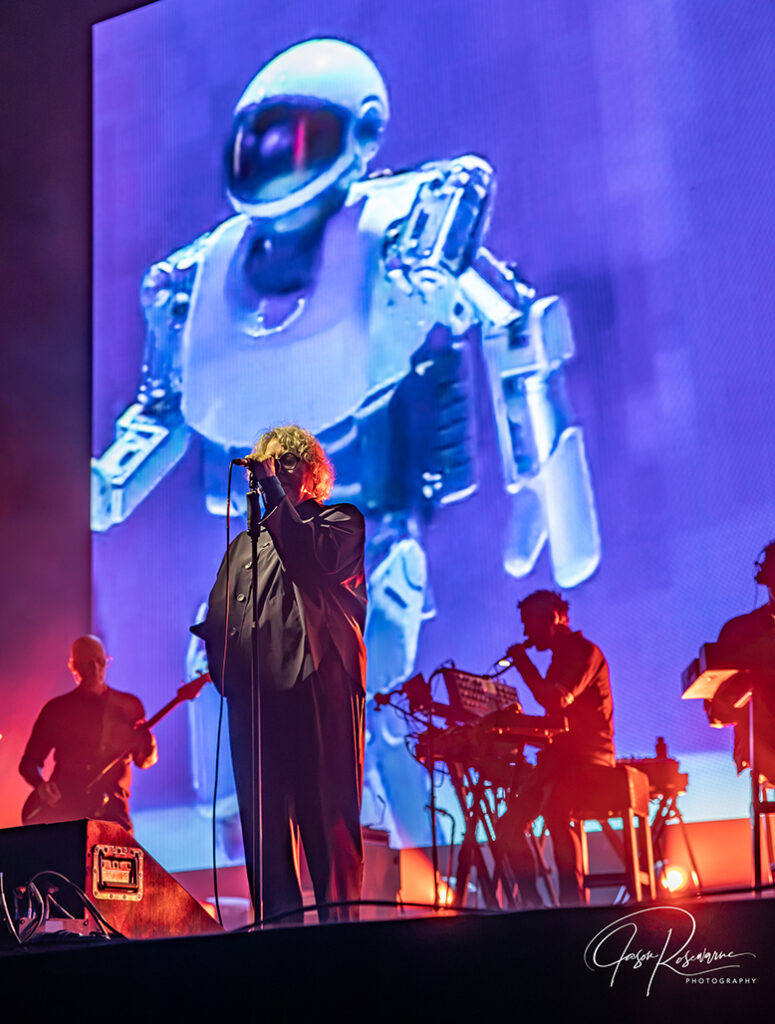
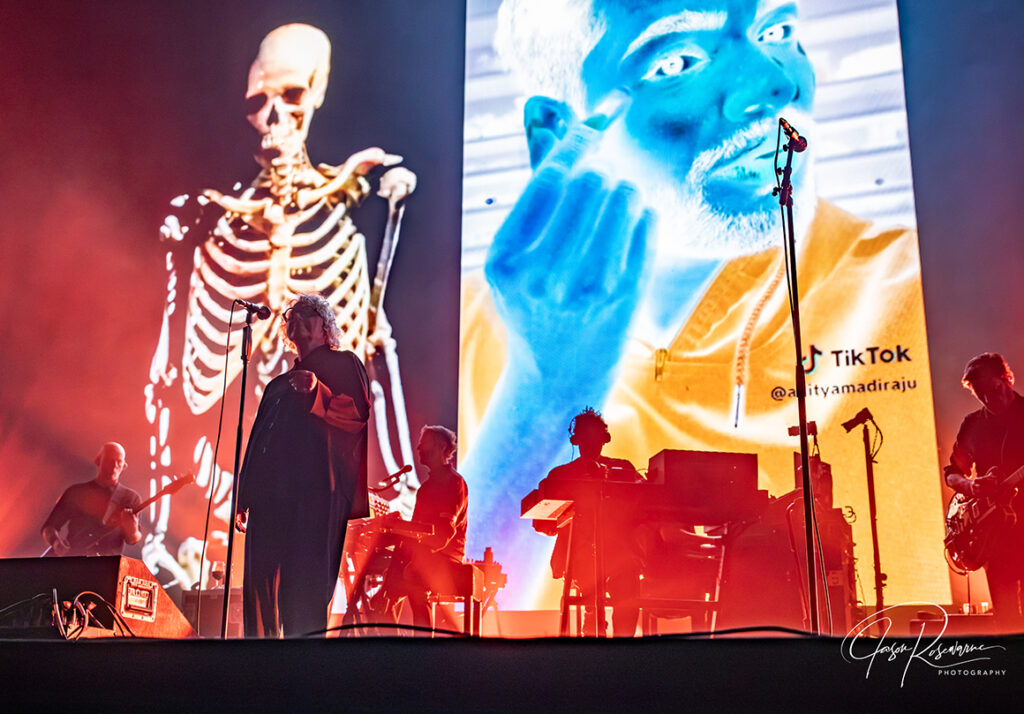
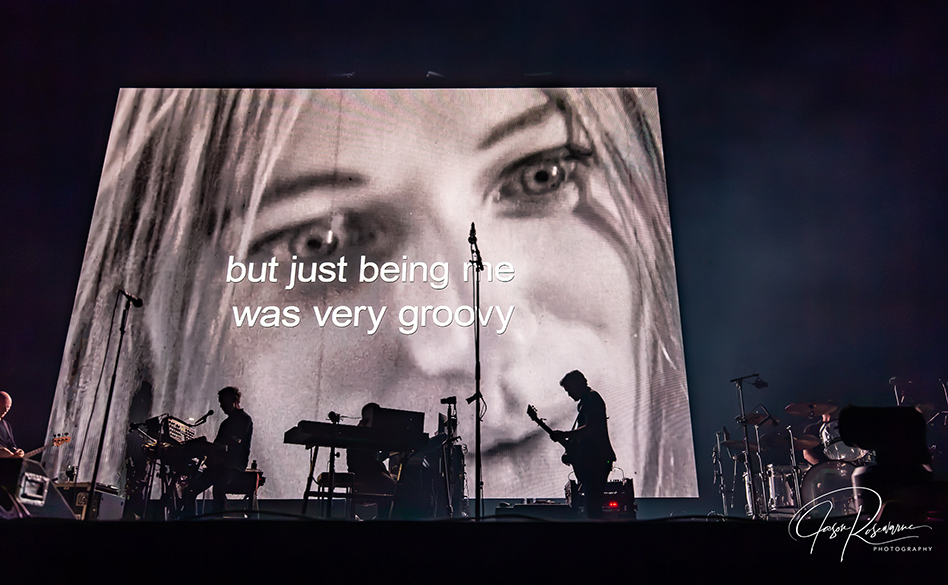
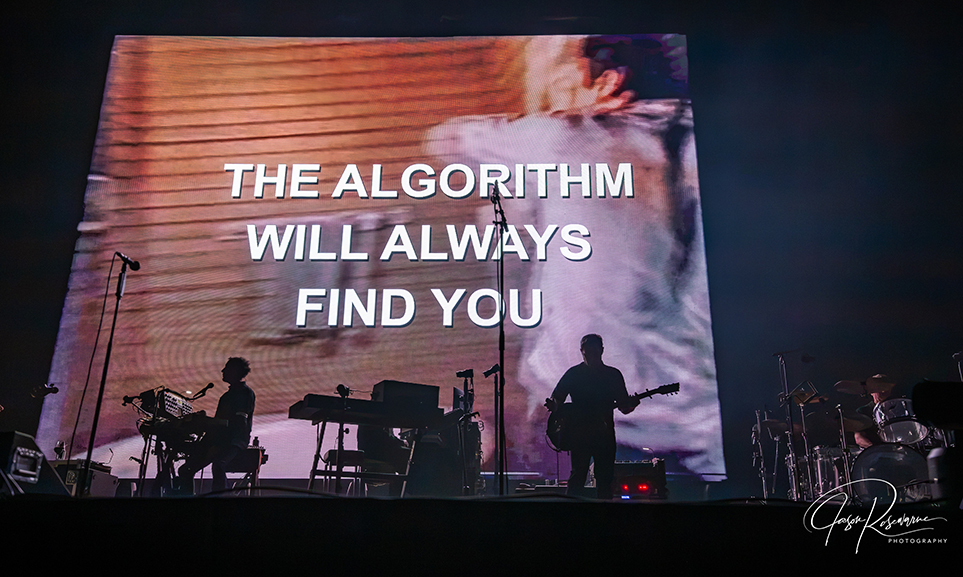
The 2026 show is an immense audiovisual experience, but calling it an audiovisual show almost undersells what Massive Attack are attempting. Created in collaboration with United Visual Artists and filmmaker Adam Curtis, the production uses monolithic LED screens, archival footage, political imagery and dreamlike sequences to create a constantly shifting portrait of a world where personal freedom, privacy and even human emotion are increasingly commodified.
It is spectacular, but rarely comfortable. The sensory experience and messaging coming from the stage are relentless. The opening moments make it clear that this is not going to be a concert content to simply decorate the music. The imagery arrives almost as an intrusion, turning the giant screens into a kind of digital battleground where advertising, celebrity culture and corporate influence are placed under scrutiny. Even a night out at a concert can become an exercise in questioning who is watching whom.
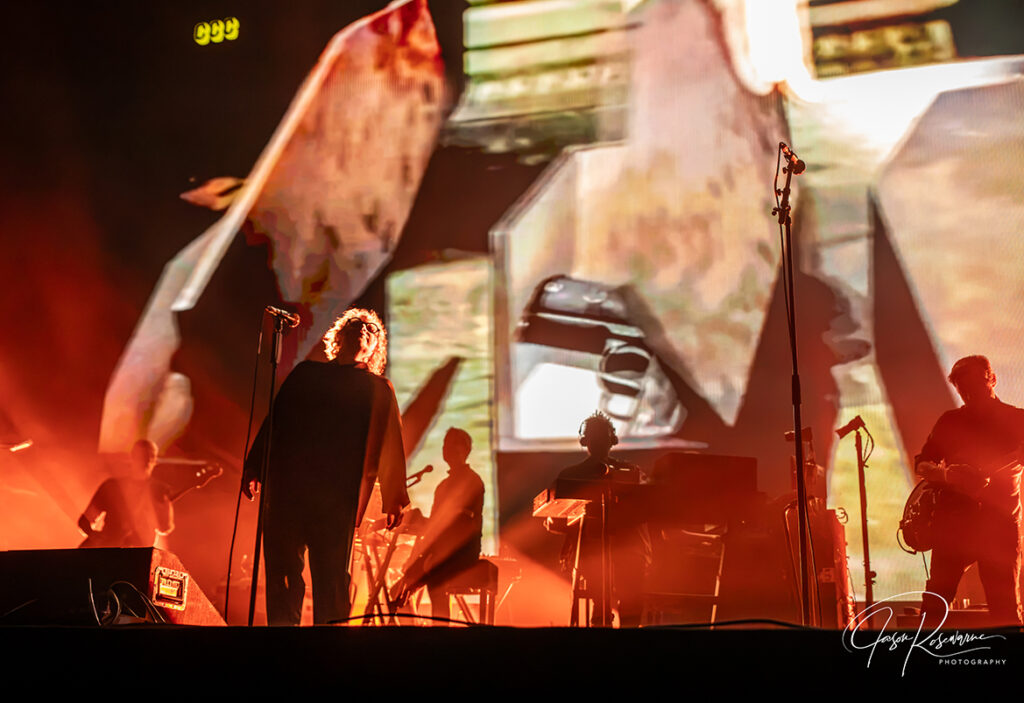
That tension continues into the opening song, “In My Mind”, as the visuals move between the surreal and the unsettling. The sense is of someone retreating into their own head, while the outside world keeps finding its way in. Rather than simply illustrating the lyrics, the visuals explore the growing overlap between private thoughts and a world where personal space is increasingly difficult to keep private.
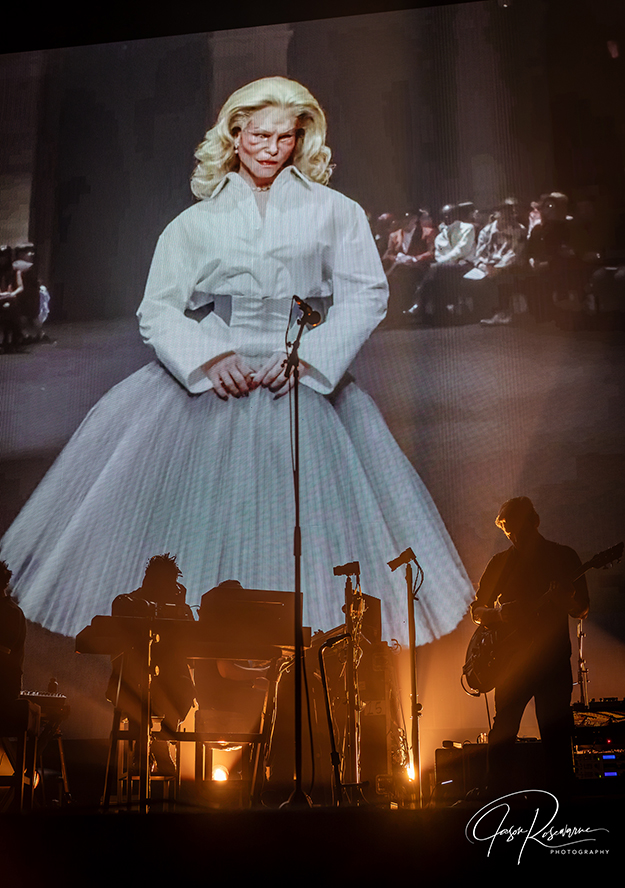
“Black Milk” takes a more personal turn. The Cocteau Twins’ Elizabeth Fraser’s voice fills the darkness as the screen shows images dealing with the human body, ageing and death. There are images of people trying to fight the effects of ageing, mixed with technology and other strange images of change and transformation. It’s unsettling at times, but the visuals don’t spell everything out, allowing the audience to draw its own conclusions.
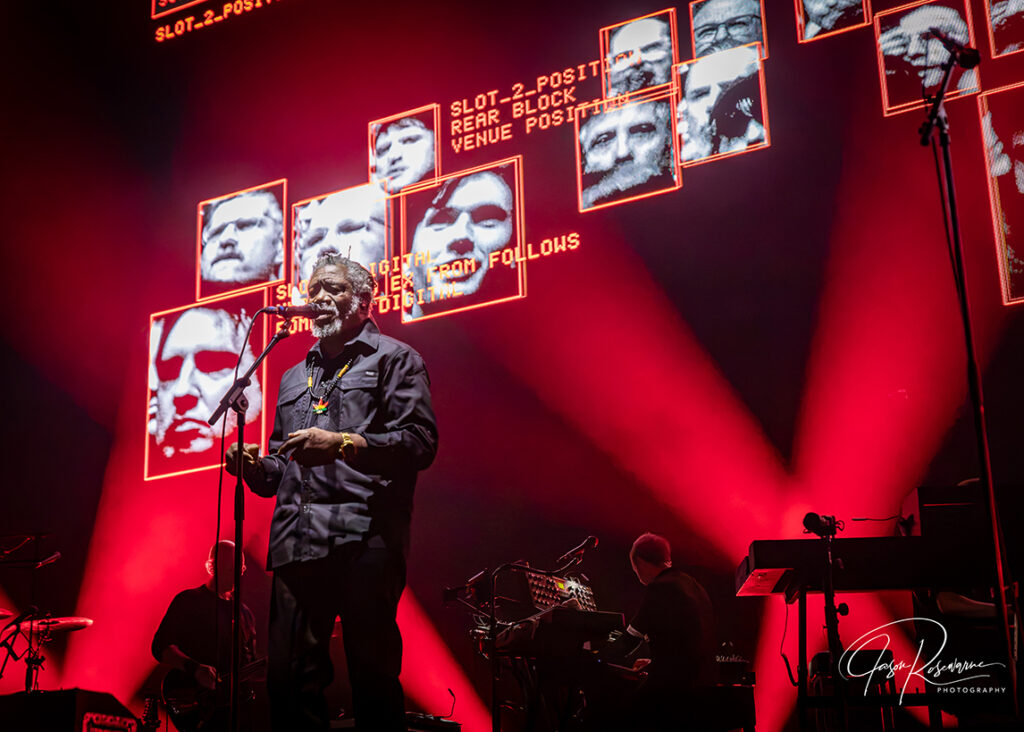
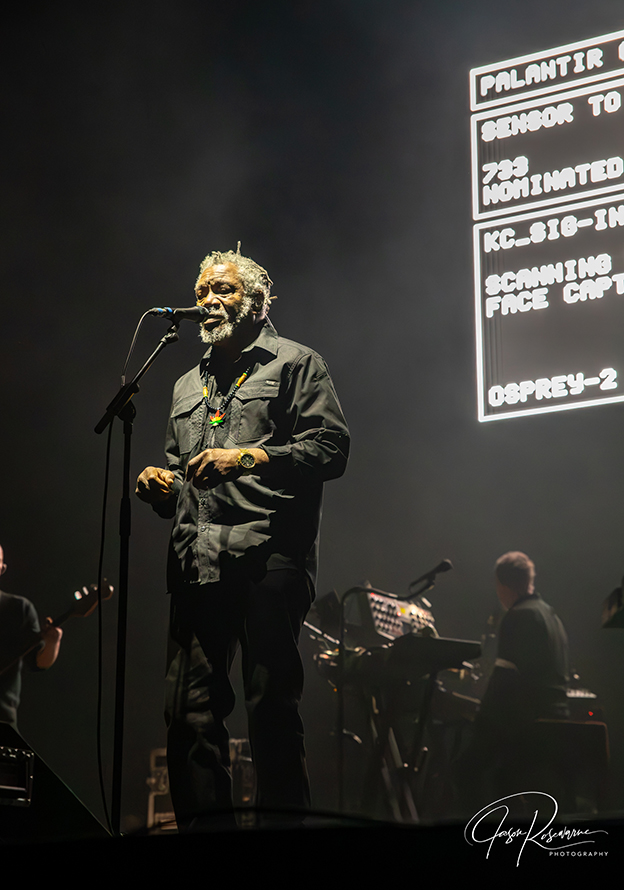
By “Girl I Love You”, the visuals become much more direct and intense. Horace Andy’s distinctive voice is set against images of intelligence agencies, borders, military power and the constant collection of personal information. Rather than making one clear political statement, the screen throws a steady stream of information at the audience. The message is that behind all the technology and data are real people, and that the information we hand over so easily can be far more valuable than we might realise.
The political messaging is impossible to miss, and nor is it intended to be.
“Regret of the Times”, a cover of a song by South Korean artist Seo Taiji and Boys, examines the relationship between censorship, commercialisation and the global pop industry. “Take It There” digs into the extraction of both physical resources and human behaviour, connecting mines and minerals with tax havens, data centres and the corporate harvesting of our thoughts, emotions and actions.
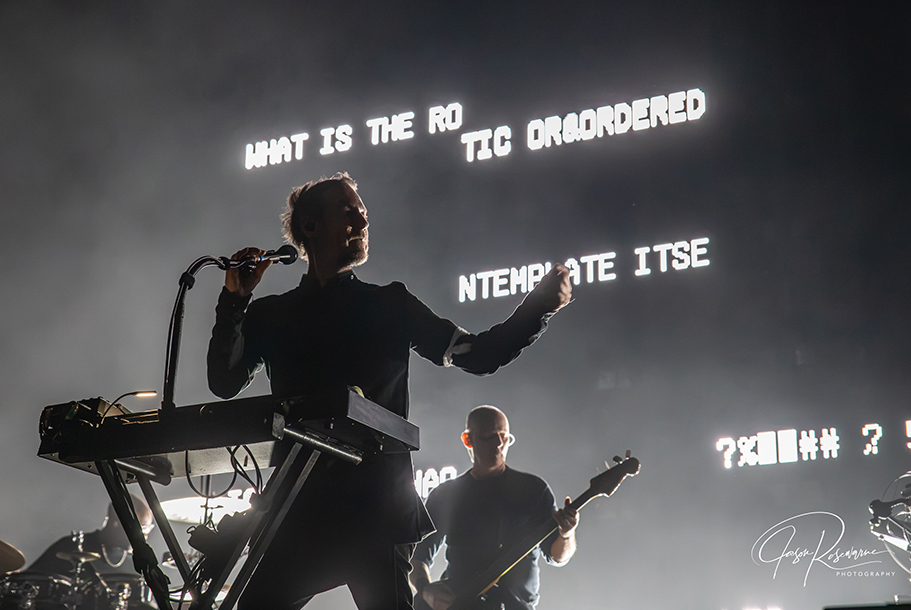
Then comes “Song to the Siren”, performed by Elizabeth Fraser, where colonial borders and man-made maps segue into the seemingly endless cycle of war.
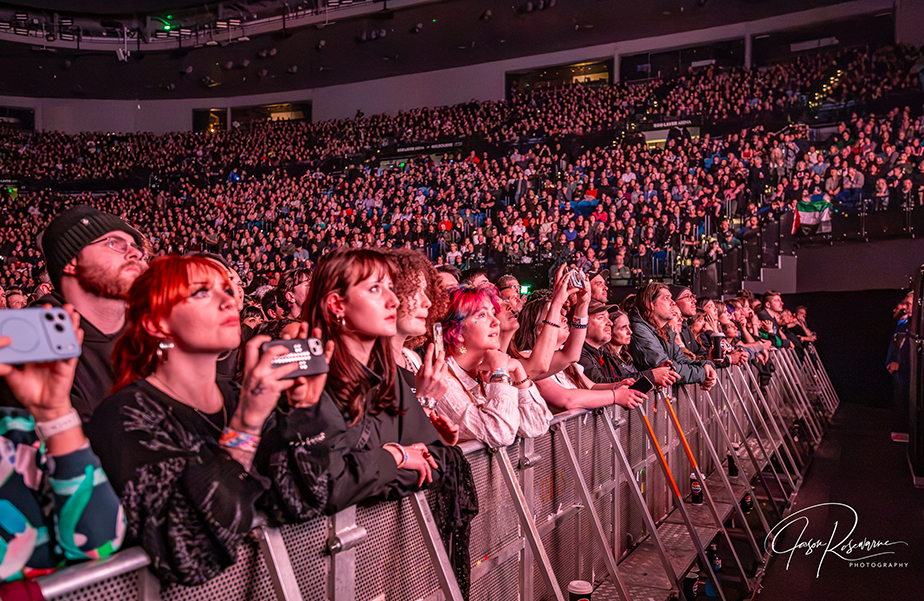
It is difficult not to view these images through the prism of Massive Attack’s recent experience in Singapore. Following their July 29 performance at the Star Theatre, members of the band were detained, questioned separately and subjected to searches, while passports were temporarily confiscated. The band said the action followed spontaneous chants of “Free Palestine” from sections of the audience and the appearance of a Palestinian flag. Of course, the same passionate chant emerged at Rod Laver Arena last night, but this time without the repercussions.
Massive Attack subsequently described themselves as “proud” to have shared that spontaneous expression with their Singaporean audience, while praising fans who took the risk of expressing solidarity with Palestinians despite the country’s censorship laws.
That incident gives an added weight to a production already obsessed with censorship, surveillance and the relationship between individual expression and institutional power. What might otherwise be interpreted as provocative stage imagery suddenly feels much less abstract. The band’s art is reflecting the very circumstances in which it is being performed.
Speaking of which, the same ‘big brother’ vibe was on display at this very venue. Since my last visit to the Arena, a new impersonal bar system has been implemented, whereby you wait at a gate to be allowed to tap a $20 purchase. Once the staff allow you to enter the fridge area, you select your drinks. If the cost is less than $20, your account is reimbursed. If it is more than $20, your account is billed. How you are scanned for this information, I don’t know. I found it to be a horrible customer experience and one that the venue should be ashamed of.
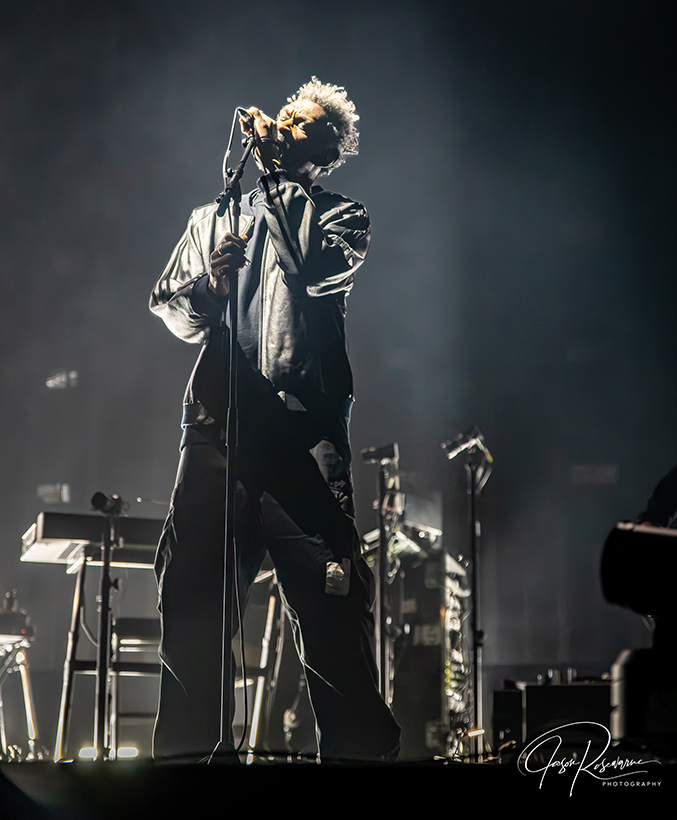
As Robert “3D” Del Naja recites the lyrics to the pulsating “Inertia Creeps”, a local touch is applied to the visual backing, with Australian news headlines scrolling through the screens. Guest vocalist Horace Andy receives and enjoys a rousing reception for his contributions to the show, including a menacing version of “Angel” from the Mezzanine album.
“Safe From Harm” is particularly devastating, comparing the reality faced by emergency first responders in Gaza, Lebanon and elsewhere with the insane financial interests surrounding the global arms industry. It is at this point that the Melbourne crowd begins the “Free Palestine” chant, climaxing in a roar.
But is this Massive Attack show simply an archive of despair? Do we need this barrage of darkness on a school night after a hard day’s work? Well, if the message can’t be delivered by a trusted, acclaimed art rock band, then who else will ask the real questions and highlight the injustices of life? The six o’clock news? I don’t think so! Social media? Forget it!
However, there is splendour to be found throughout the night. Deborah Miller’s performance of “Unfinished Sympathy” is stunningly beautiful. Their music remains hypnotic and spacious, providing an emotional counterweight to the barrage of information on the screens. The darkness is often accompanied by moments of extraordinary visual elegance.
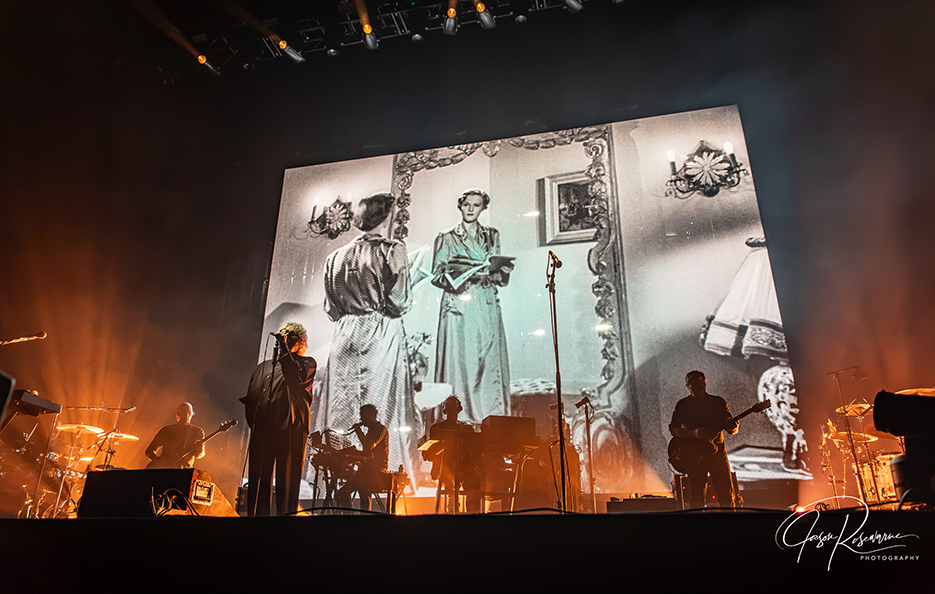
“Group 4” eventually brings the production back to the question raised at the beginning: whatever happened to the liberated individual promised by the counterculture of the 1960s? Has the dream of individual freedom evolved into an existential nightmare of isolation, surveillance and manipulation?
It is an appropriately unresolved question.
Massive Attack’s greatest achievement is that they don’t attempt to provide easy answers. Instead, they create an environment in which the audience is forced to tackle contradictions: entertainment and confrontation, beauty and brutality, freedom and surveillance, individuality and commodification.
In an era when political messaging is increasingly filtered, packaged and monetised, Massive Attack’s refusal to separate art from the world around it feels increasingly radical.
It’s not background music for a night out. It is a sensory assault, a political provocation and an extraordinary concert experience that leaves the audience with a thing or two to contemplate. Is it a definitive commentary on the world we live in? Perhaps. Was I glad I attended? Hell yeah! Did I enjoy the show? I don’t really know.