
Dream Theater @ Margaret Court Arena 40th Anniversary Tour – Feb 12, 2026
Review: Joshua Batten. Photos: Jason Rosewarne.
When Progressive Metal icons Dream Theater toured Australia for the first time in January 2008, they had only just recently celebrated their 20th anniversary as a band. Almost 20 years have passed since then, and in that period, they’ve only been back a total of three times, each with diminishing returns (and number of dates) as stopovers in Melbourne and Sydney were squeezed into the middle of runs across Asia. Their last visit was in 2017, and a planned run of dates in April 2020 was cancelled for obvious reasons. It’s safe to say it’s been a while between drinks for Antipodean fans. But now the band is finally back in Melbourne for the second of four shows across the East Coast as part of their 40th Anniversary world tour.
The “40th Anniversary” moniker is a bit of a misnomer – Although Dream Theater formed at Berklee College of Music as a trio called Majesty in 1985, they only became a 5-piece the following year and didn’t release their first album until ’89. Then they only started truly building their worldwide fanbase in ’92, with the release of their sophomore album Images & Words, still regarded by many as their definitive record. Ultimately, the real selling point of this tour is the return of original drummer Mike Portnoy, who was the driving force and primary spokesman for the band until his departure in 2010. While Mike Mangini has done a fine job keeping the seat warm for him for 15 years, fans have treated Portnoy’s return as the second coming of Prog’s biggest band of the ’90s & 2000’s. They’ve been playing much larger venues on this tour than they did during the Mangini era, including London’s O2 Arena, New York’s Radio City Music Hall, and tonight’s venue, Melbourne Park’s Margaret Court Arena. After hitting up the Palais on the last few trips, this is their biggest show in our fair city since they braved Festival Hall back in 2008. But as the aging members enter their 60’s, can they still deliver the technical precision their fans have come to expect? And can they still draw a crowd in the age of Spotify and TikTok? (Spoiler alert: yes they can.)
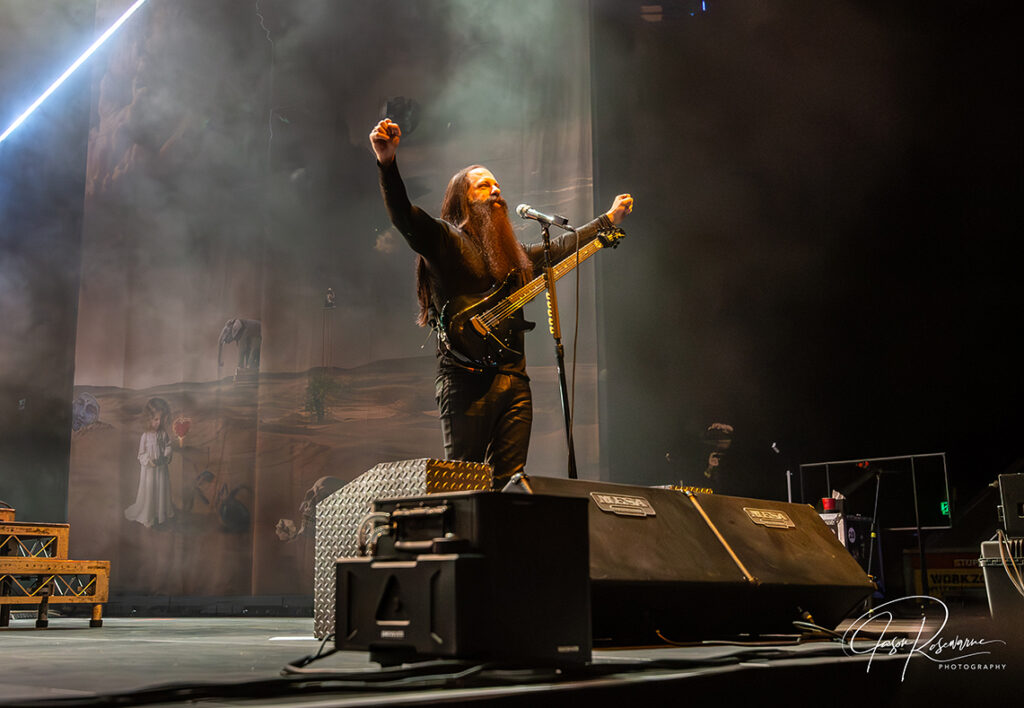
The audience roaming the halls of the lobby before showtime comprises a diverse group of mostly men between the ages of 30-50, proudly sporting t-shirts of their favourite DT albums and other modern progressive bands such as Opeth, Haken, Porcupine Tree, Periphery and The Aristocrats. There are a handful of Gen-Z’ers and children in attendance, but they wouldn’t have discovered Dream Theater’s music through a viral TikTok clip or the Spotify algorithm – they are here either because their parents have brought them, or because they are musicians themselves. Indeed, I met several young drummers tonight, who were clearly all here to celebrate Portnoy’s return, and many older fans refused to see the band with Mangini at the kit. This is very much the Prog equivalent of Slash rejoining Guns n Roses back in 2016 (or as one fan put it, “Daddy’s home!”).
Audience members are making their way to their seats when Bernard Herrmann’s Psycho Prelude plays over the PA. Then the lights go down, the curtain drops, and the band launch into the 10-minute “Metropolis Pt 1” from Images and Words, failing to miss a note across that entire runtime. This is followed by a 15-minute run of the first four main tracks from their 1999 rock opera Metropolis Pt 2: Scenes From A Memory, a nice compensation since this the album that would have been played in full on the band’s aborted 2020 tour. These songs were never hit singles, but are clear fan favourites, and from the opening riffs, crowd members are up on their feet, air-drumming and air-shredding through the changing sections and time signatures.
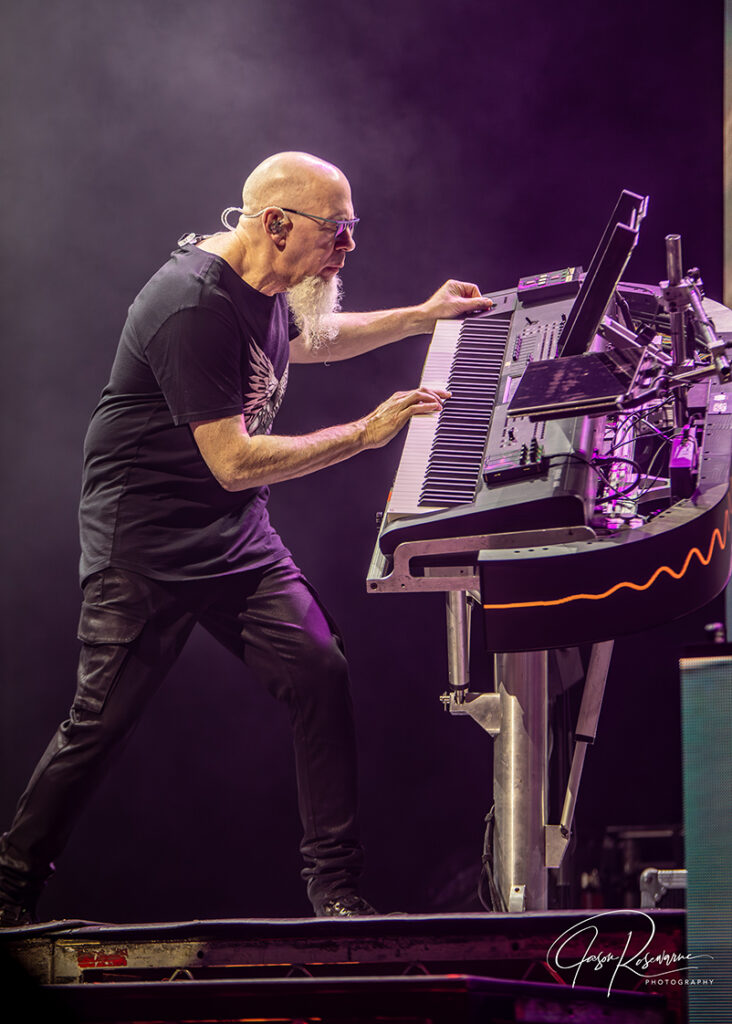
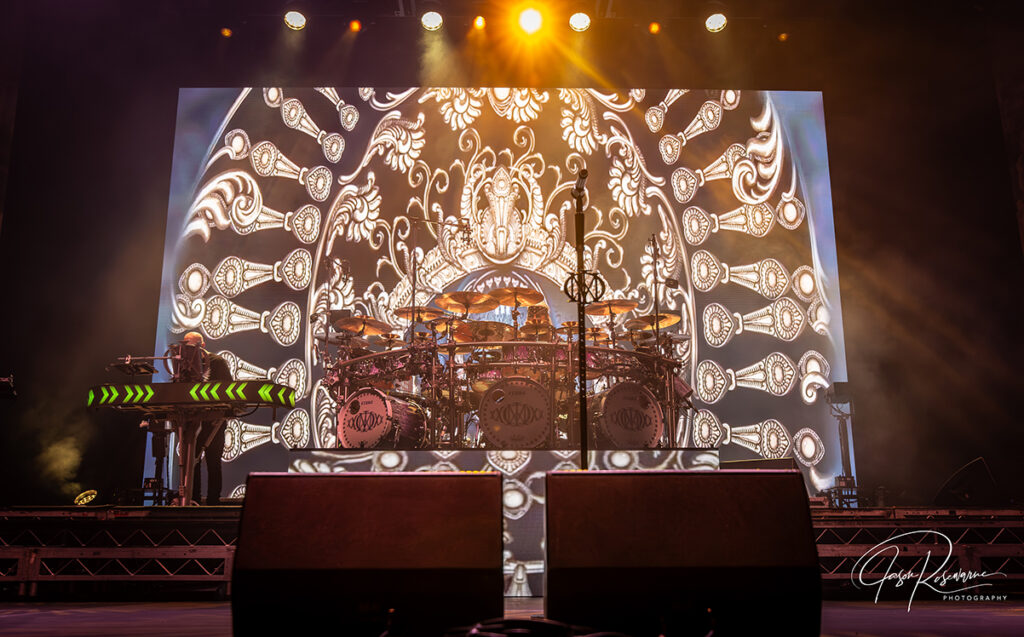
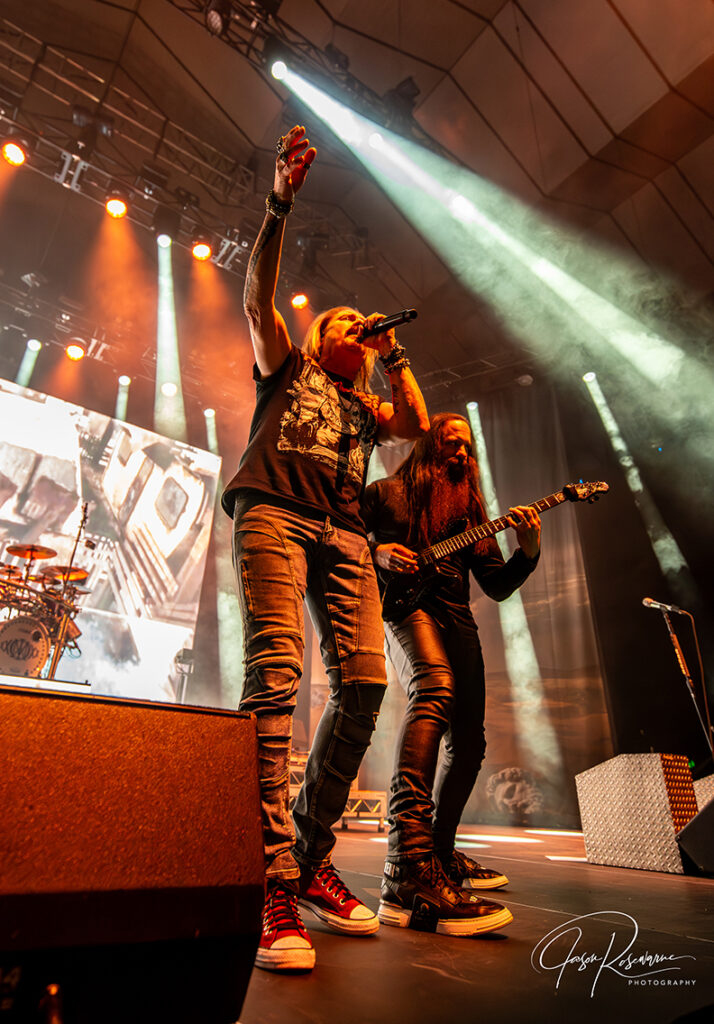
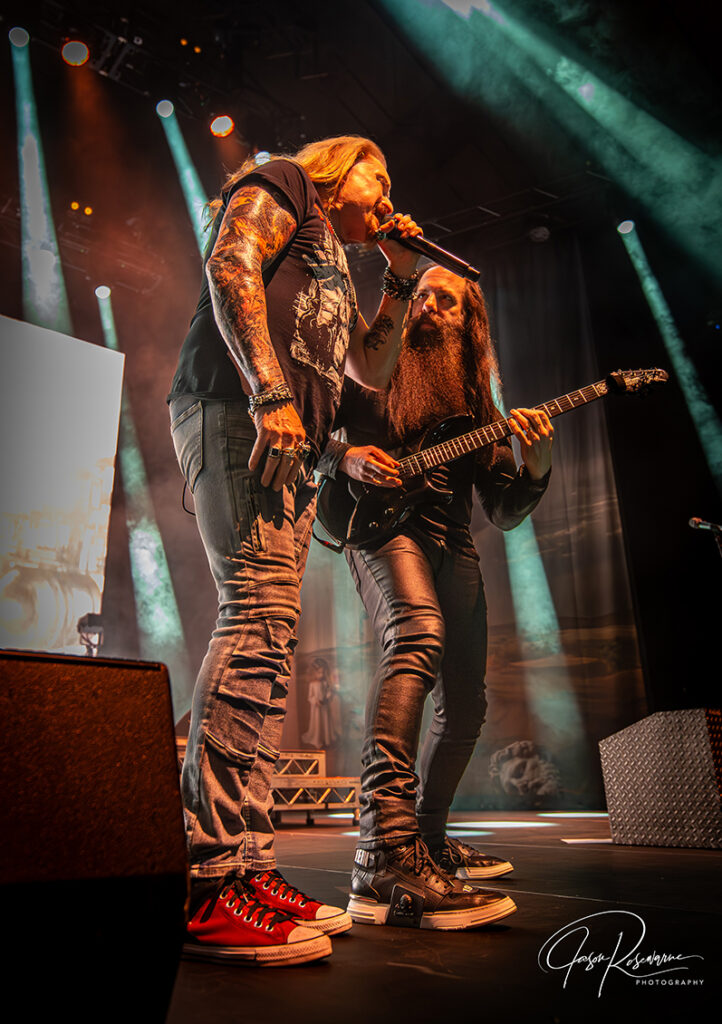
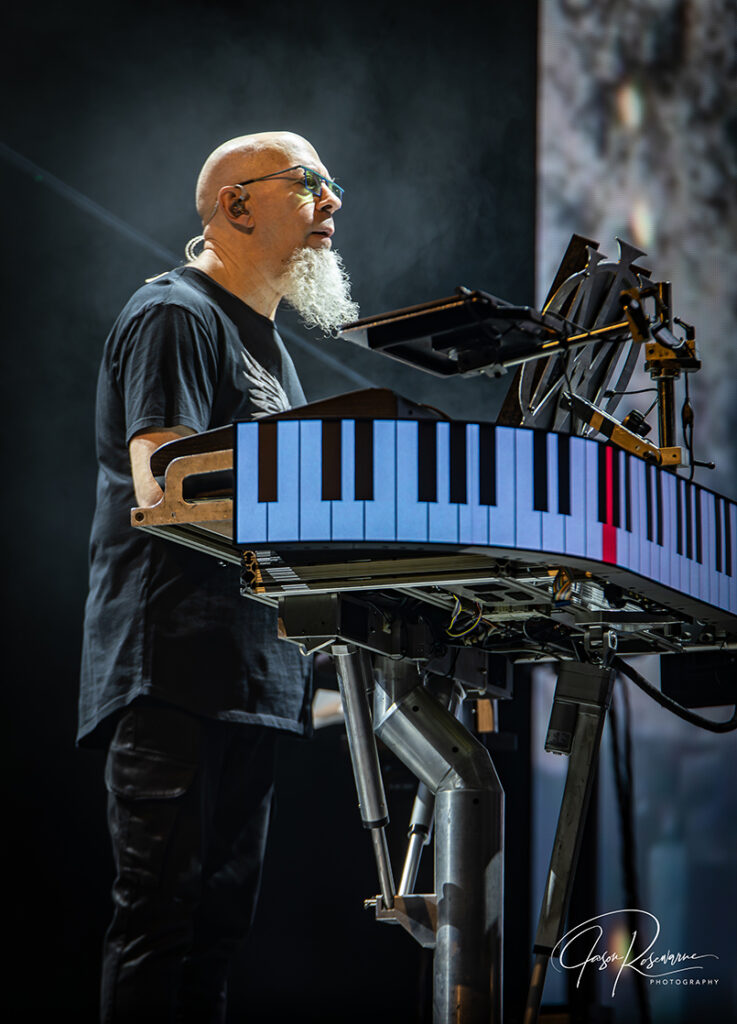
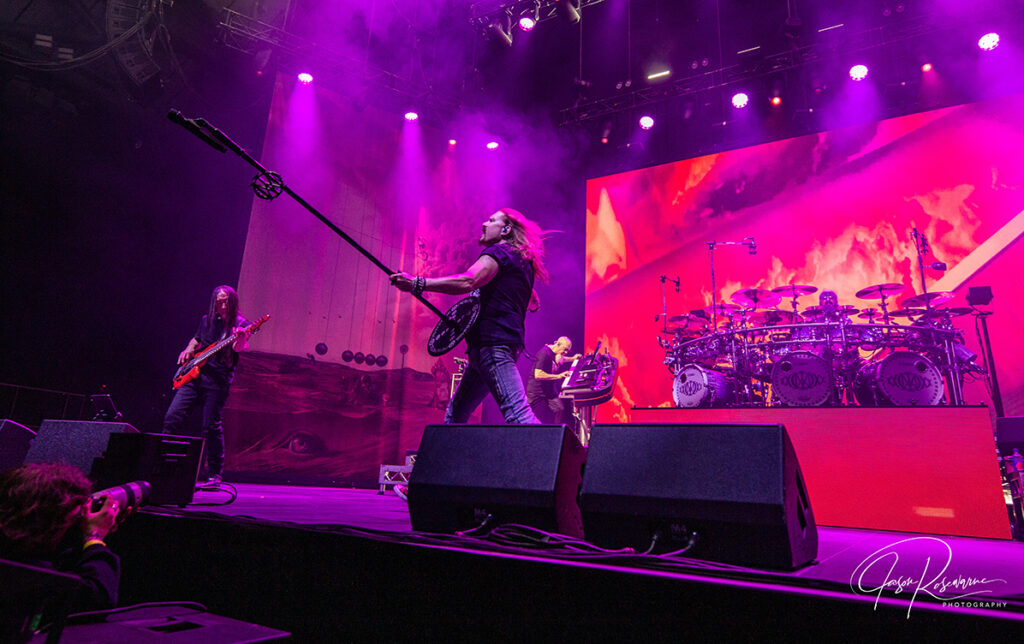
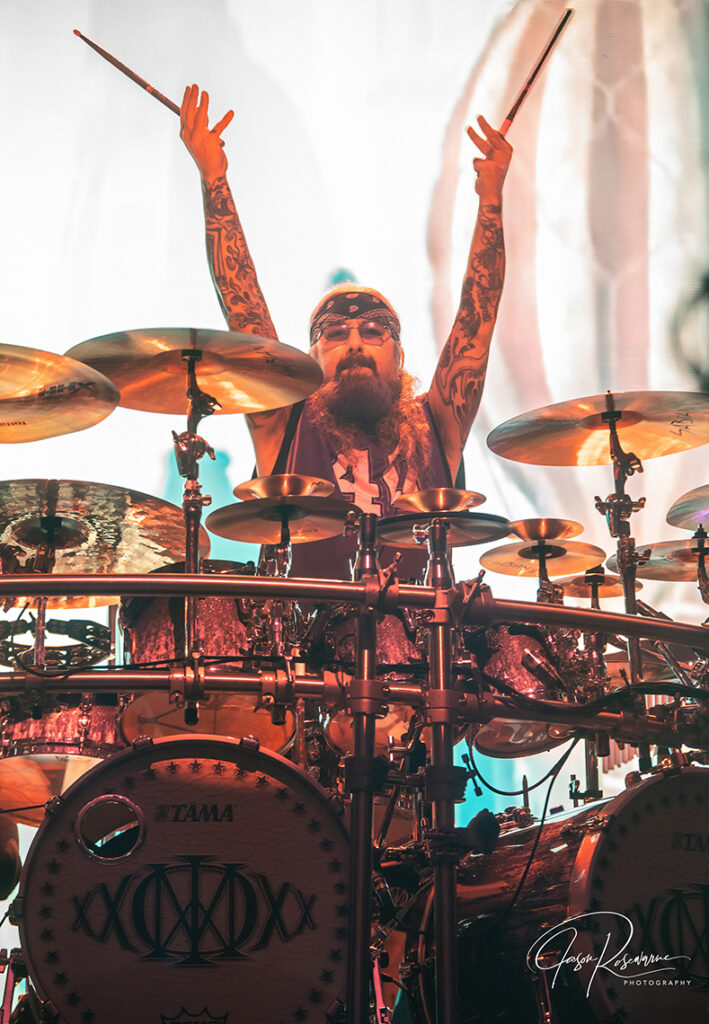
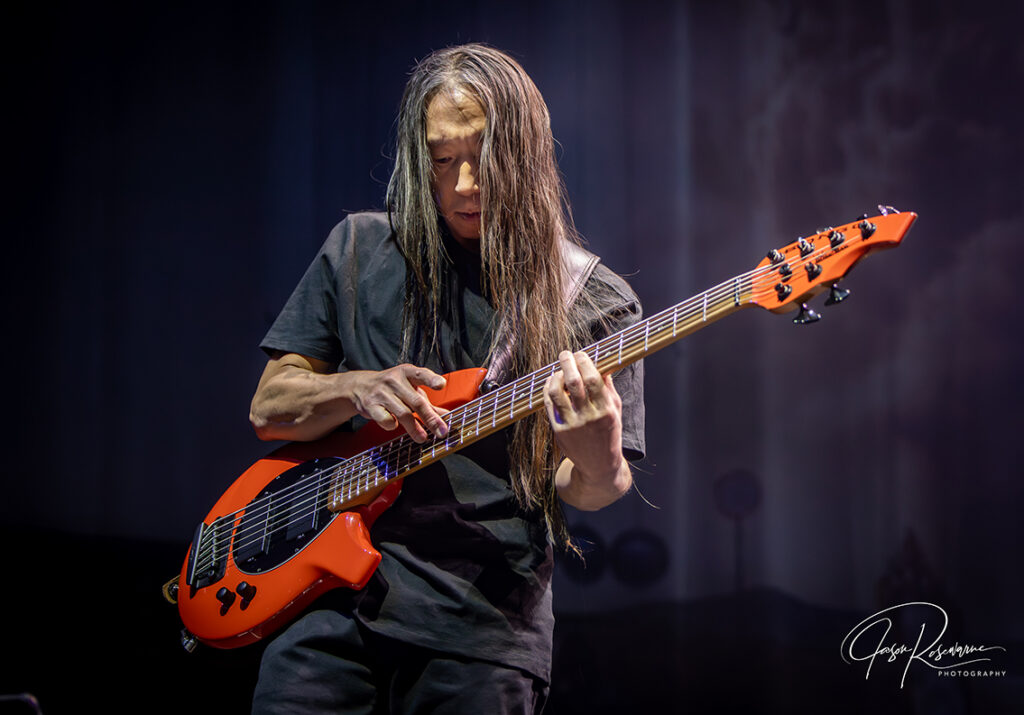
Each band member has their own pedigree and personality, to the point that their on-stage movements are as much a signature of a Dream Theater show as the music itself – guitarist John Petrucci plays 6, 7 and even 8 string guitars throughout the night, utilising chorus-driven arpeggios, distorted riffage, intense shredding, and legato solos with passion and tone, regularly putting his foot up on metallic wedges and stage monitors for ergonomic efficiency like a classical guitarist. Bassist John Myung combines chunky, springy tones with unconventional bass techniques such as tapping and harmonics, all while maintaining his trademark calm, stoic demeanour. Keyboardist Jordan Rudess is known affectionately among fans as “The Wizard”, and tonight his wizardry is in full force both musically and technologically, playing all his parts on a single keyboard positioned on a special stand that rotates and slides out so the audience can occasionally see what his fingers are actually doing. When they can’t, we still get a great visual representation of what he’s doing thanks to an LED-Screen wrapped around the keyboard that reacts to his playing, with position and velocity-sensitive displays. And as for Mike Portnoy, he’s having the time of his life – with his hypnotic, fluid drumming and crowd engagement, even playing standing up on occasions, he has slotted back into his position like he never left.
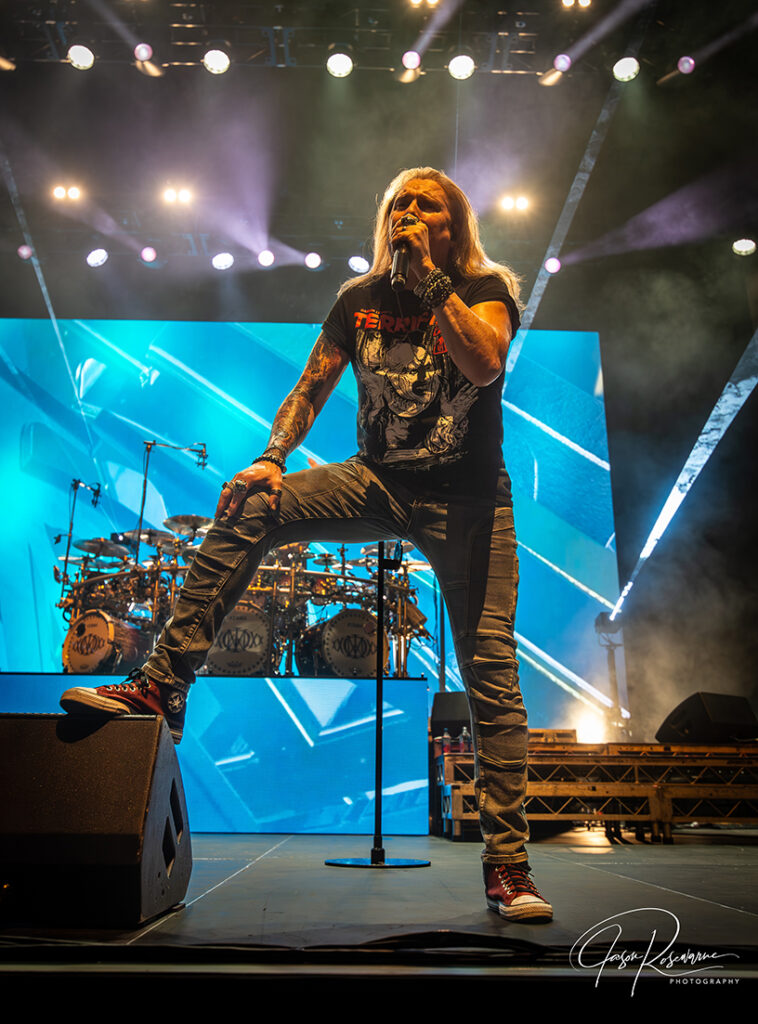
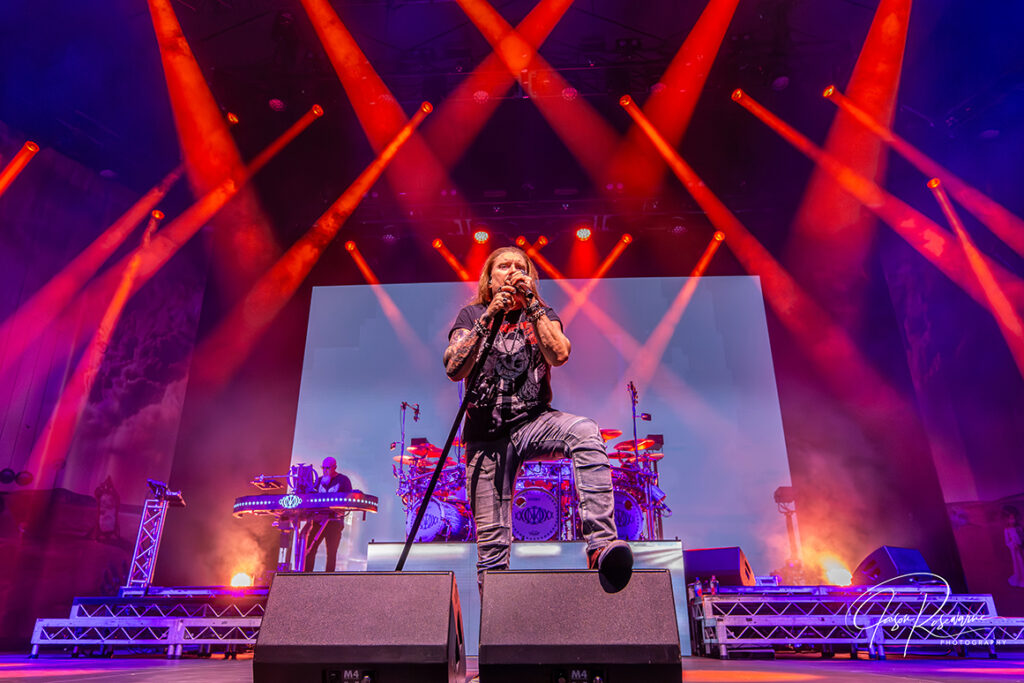
And then there’s singer James LaBrie – His operatic high tenor vocals are just as technically challenging as any of the instruments, and LaBrie has often come under fire for failing to deliver in a live setting to the standard of his studio recordings. For many, their enjoyment of a Dream Theater gig can depend on whether LaBrie had a good night or bad night, and while he has taken measures in the last few years to take care of himself and improve his range, he is still 62 years old, and recent iPhone clips online have showcased him slightly off-pitch, failing to reach certain notes exactly. But here’s the thing – a 30-second clip on a quiet camera phone is not a good indicator of a full performance in a big arena with loud speakers and natural acoustics. From where I was sitting, James was on fire tonight, and although he wasn’t always pitch perfect, ultimately none of that matters in the moment, as there is so much going on musically that you simply don’t have the energy or time to waste on scrutinising every note. Also, voice aside, LaBrie is full of energy, running and jumping across the stage like he’s in his mid-20’s!
The opening Metropolis mini set is followed by 1994’s “The Mirror” and 2014’s “The Enemy Inside”, the latter being the only song of the Mangini era featured in the show tonight. While the performance is great, I did personally feel that the colourful, psychedelic rear screen projection was at odds with the song’s lyrics, which were inspired by war veterans returning home and the struggle of PTSD. In fact, if there is anything to criticise about the show, it’s that the rear screen videos are often a distraction that don’t always serve the music’s best interest, especially with the clear use of AI in the upcoming second half. (NB: It’s been brought to my attention that the intended visuals for “The Enemy Inside” have been scrapped for the Asia-Pacific run due to portraying military violence, an understandable choice given the current political climate in places like Korea.)
The band fully embrace and acknowledge their influences on “Peruvian Skies”, beginning with a new atmospheric intro inspired by Rush’s “Xanadu” and Marillion’s “Bitter Suite”, before getting into the song itself and briefly detouring to play excerpts of Pink Floyd’s “Wish You Were Here” and Metallica’s “Wherever I May Roam”. It also sees Rudess come out from behind his rig to join his bandmates on the stage floor with a keytar, and by the song’s end, all four mobile musicians are standing shoulder-to-shoulder, with Portnoy standing up and rocking out with them from behind his kit. After each member being off in their own space (literally) for much of the first set, this is the moment when they truly come together as a band, with their combined history together on display.
With 2003’s ballsy metal anthem “As I Am” as the first set closer, we have been royally treated to something as close to a “greatest hits” set as is possible from a band with no actual chart hits in this hemisphere. But DT aren’t content to sit back and rest on their laurels for the entire night – the first 45 minutes of the second set is dedicated to an abridged performance of their latest album Parasomnia, a concept album exploring sleep disorders and nightmares. With song titles like “In The Arms of Morpheus”, “Night Terror” and “Midnight Messiah”, this is a much darker, more theatrical set, culminating in the 20-minute album closer “The Shadow Man Incident”. This number features an inflatable 7-foot tall “Shadow Man” puppet leering over the audience with red lights for eyes, much like Eddie from Iron Maiden, another of the band’s biggest influences. Composition-wise, while recent epics such as “Illumination Theory” and “A View from the Top of the World” have struggled to warrant their extended runtime, ““The Shadow Man Incident” has enough twists and turns to keep listeners engaged.
As a reward for braving the darkness, we wake up from the nightmare to a heavenly dream, as we are treated to another 20+ minute piece; “Octavarium”, the title track of the band’s 2005 LP and often considered their magnum opus. Made up of 5 distinct movements based around the cyclical nature of life and music, the die-hard fans know every word and beat, and by the time we reach the climatic solo, we have all, air-drummed and air-shredded, and sung along to a piece of music many of us thought we would never hear live, let alone in its entirety. Before this tour, it hadn’t been played live in full since its initial outing back in 2005-06, and bringing it back was a true gift to the fans and a euphoric climax to the main set.
For the encores, we get DT’s two most “accessible” fan favourites (Still each clocking in at over 7 minutes). First up is 1999’s “The Spirit Carries On”, a Pink Floyd-inspired gospel ballad/torch song, which gives way to a sea of phone lights and the biggest sing-along of the night. Finally, we get the song that truly launched the band and the only hit single in their catalogue; 1992’s “Pull Me Under”. The crowd goes wild and alternates between headbanging and singing along with outstretched arms to the anthemic choruses. The band is as tight as ever, not a single note has been missed, and the show finally ends after three hours of musical mayhem.
I last saw DT in 2014, having missed the 2017 Melbourne show. I’ve also travelled to the US a couple of times to see Portnoy with his various side projects, including Transatlantic, Flying Colors and The Neal Morse Band. Tonight was my first time seeing the classic lineup, and it was well worth the wait. As soon as the show started, I was transported back to my teenage years, when I would sit with my headphones, listening intensely to this music that required multiple listens to fully comprehend, but once I had it down, there was no going back.
This is not a show for casual listeners or curious newcomers – this is for the long-time fans who have put in the work and studied the music on a deep level. Forty one years after three friends started jamming at Berklee over a shared love of Iron Maiden and Rush, and almost 34 years after their breakthrough, Dream Theater have nothing to prove to anyone. They know what they are capable of, with a deep back catalogue to draw from alongside equally ambitious new material, and they know what their fans want, refusing to compromise for the sake of viral clicks. It’s their own world, and we were truly blessed to be allowed in for a few glorious hours.