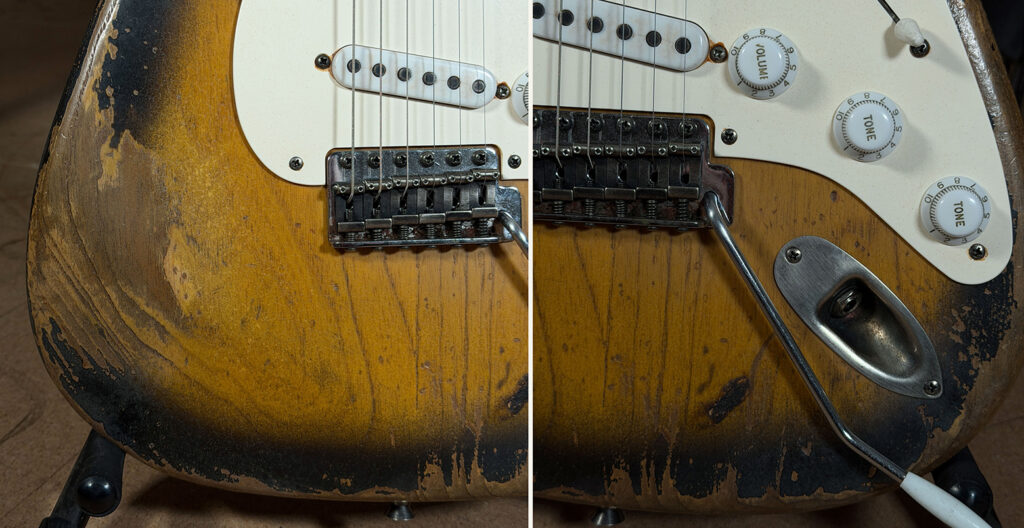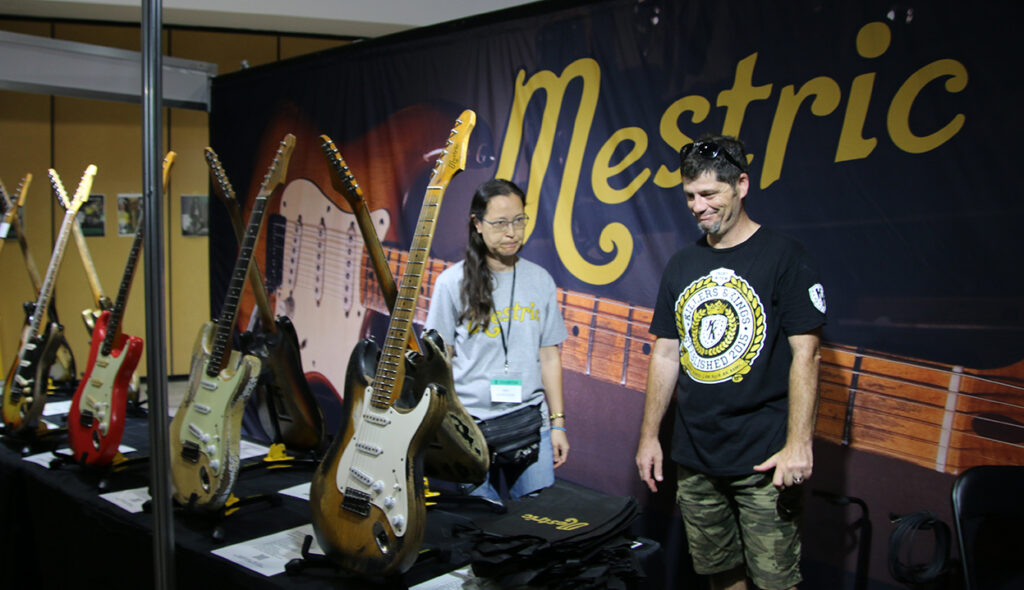


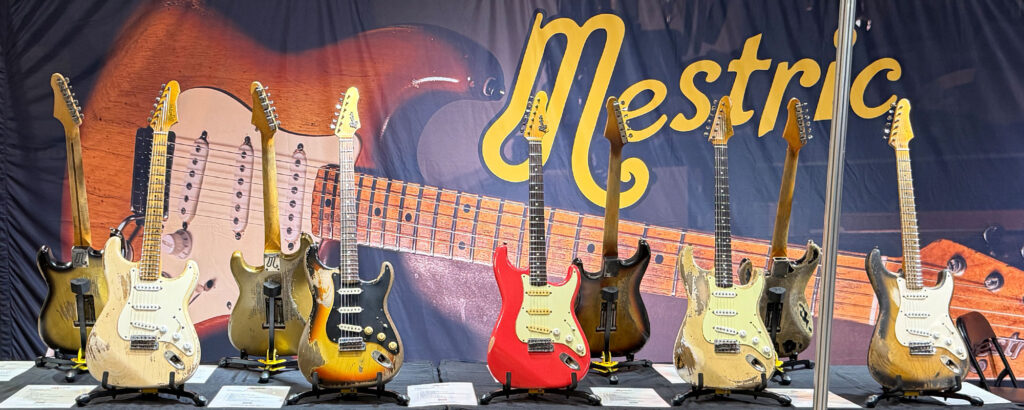
Australian luthier Rob Mestric joined Australian Musician’s Greg Phillips to discuss the launch of Mestric Guitars, his philosophy behind aged electric guitars, and the journey from musician and repair specialist to boutique builder. Based in Port Macquarie, NSW, Mestric officially launched the brand at the 2026 Sydney Guitar Show, where the debut “Foundational Run”, a numbered series of ten hand-built instruments immediately attracted strong interest from players who had followed the project online through his long-running business, Port Mac Guitars. The launch also coincided with the opening of the dedicated website, Mestric Guitars, showcasing the guitars, build process and future plans for the brand.
MORE ABOUT THE INTERVIEW AND MESTRIC GUITARS
During the interview, Mestric reflected on growing up in a musical household, discovering guitar through his older brother and the music of Jimi Hendrix, and eventually studying music at the University of Western Sydney. Although he played in bands throughout his life, it was after relocating to Port Macquarie more than 20 years ago that live performance became a bigger part of his musical identity.
Mestric explained that guitar building first began as a high school project when he built his first electric guitar at age 17. After years of occasional builds, repair work and running Port Mac Guitars, he decided a few years ago to formalise the idea into a dedicated boutique brand focused on small-batch aged instruments with strong artistic identity.
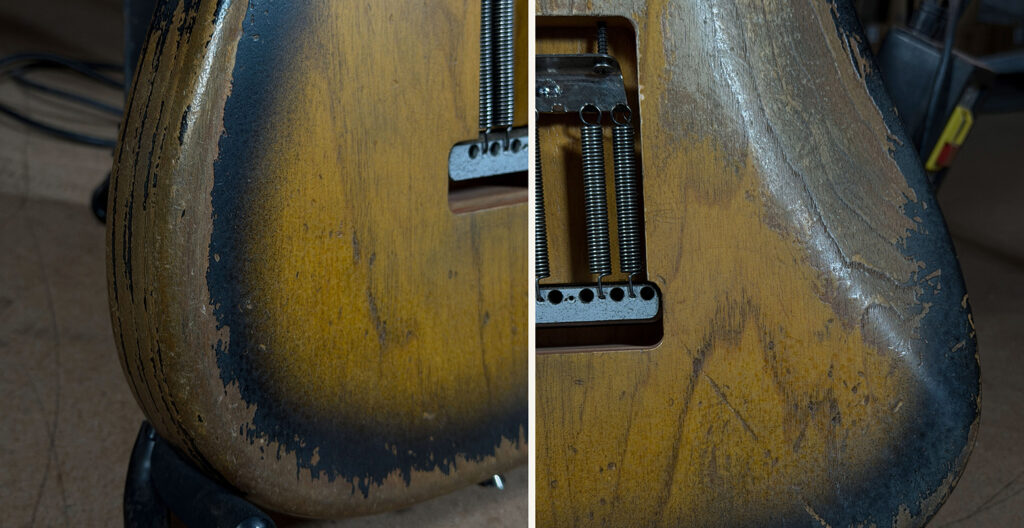
A major focus of the discussion centred around Mestric’s obsession with feel and authenticity in the aging process. Rather than simply replicating vintage wear patterns, he approaches each guitar as a storytelling exercise, imagining decades of use by different players and translating those imagined histories into worn finishes, fingerboard wear and tactile details. He revealed that much of the work players may never consciously notice, heavily rolled fingerboard edges, simulated fretboard wear, aged hardware details and subtle contour shaping are the elements he obsesses over most.
Mestric also detailed the technical side of the build process, including sourcing raw necks and bodies from Japan before extensively reshaping, contouring and finishing them by hand in Port Macquarie. Each guitar features hand-wound pickups built in-house, stainless steel frets, nitrocellulose lacquer finishes and precision fretwork completed using a German-made PLEK machine, which he described as invaluable for achieving consistent setup accuracy and playability.
While many boutique builders offer full customer customisation, Mestric said he deliberately avoids that model, preferring instead to treat each instrument as a personal artistic vision. Comparing the process to painting, he explained that he wants each guitar to feel like a finished creative work rather than a customer-designed product.
The interview also touched on the changing culture of guitar playing in the social media era. Mestric believes modern “guitar heroes” still exist, but today they are often players building audiences through YouTube, TikTok and Instagram rather than through traditional rock stardom. He argued that the accessibility of online learning and performance platforms has pushed guitar playing standards higher than ever.
Looking ahead, Mestric revealed plans to expand the range with a new single-cut model inspired by 1950s designs, while continuing to produce guitars in extremely limited numbers, generally only one or two instruments at a time. Future releases are also expected to include aged components, hand-wound pickups and additional small-batch collections building on the original Foundational Run series.